
Cabopino is the small, green, easternmost corner of Marbella. It sits beyond Elviria and Artola, just before the boundary with Mijas Costa and Calahonda. In one short stretch it has a small marina village, one of the last protected dune systems on the Costa del Sol, and an 18-hole golf course. It suits buyers who want space, pine trees and the beach more than shops on the doorstep. Prices start at around €450,000 for a two-bedroom apartment, run to €1.3m–€1.65m for a semi-detached house on the golf, and reach €3m–€5m for the handful of beachfront villas.
This guide was published in October 2026, and the prices and figures in it reflect the market at that time. Prices move, so ask us for the latest.
Cabopino at a glance
| Where | The eastern edge of Marbella municipality, past Elviria and Artola, next to Calahonda (Mijas). About 10–12 minutes by car from central Marbella |
| Type of area | A marina village on the coast, a small 2000s residential pocket inland, and golf-side new build higher up. No commercial centre of its own |
| Property mix | Apartments and townhouses near the port; semi-detached and apartment developments around the golf; a handful of older beachfront villas |
| Asking prices | Apartments from ~€420,000 · semi-detached on the golf €1.3m–€1.65m · new-build apartments €1.1m–€1.3m · beachfront villas €3m–€5m |
| Best for | Golfers, beach-and-nature people, and buyers who want new build on Marbella East |
| Beach | A wide open sandy beach either side of the port, backed by the protected Artola dunes |
| Golf | Cabopino Golf: 18 holes, par 71, right inside the area |
| The trade-off | One road bridge connects coast and inland, there is no supermarket beyond the port’s small shop, and the port is quieter out of season |
Walk it with us first
Chris plays Cabopino Golf most weeks and brings clients to the clubhouse for coffee, so this one is a local walking you round. The tour covers the inland residential area, the golf, the new developments, the port and the dunes.
What Cabopino is actually like
The first thing you notice in Cabopino is the trees. Wide umbrella pines cover almost the whole area, from the golf course down to the sand. That is the defining look of the place, and it is why Cabopino feels more like a stretch of coastal forest than a suburb.
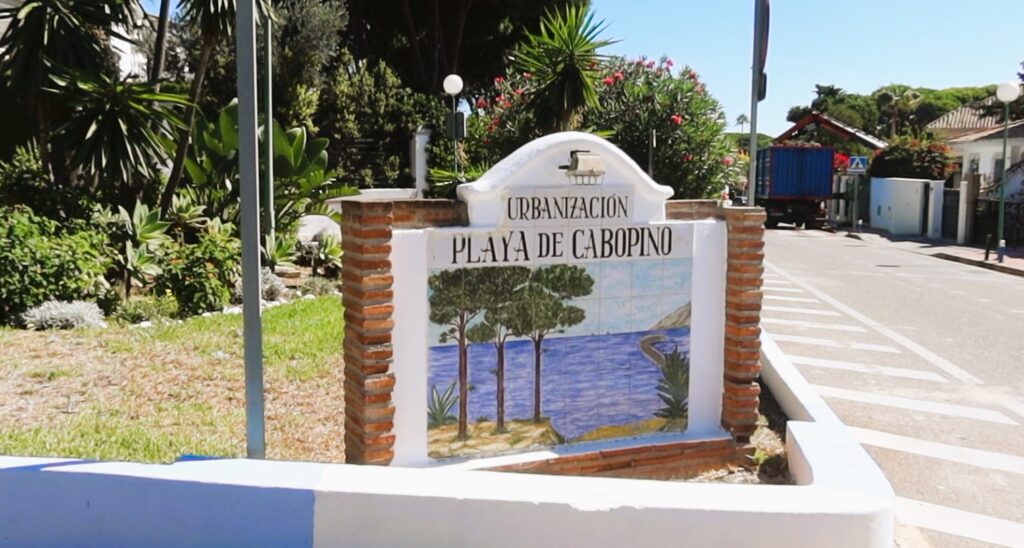
Getting around is simpler than it looks on a map, because there is essentially one turn-off and one bridge linking the coastal side to the inland side. Just by the bridge is Da Bruno a Cabopino, one of the branches of a well-known Marbella Italian group. It is a good summary of the area: plenty of space, plenty of green, and an outdoor circular bar that lights up at night. Next to it is Camping Cabopino, a campsite with pools, sports facilities and pitches for caravans and campervans. It is smaller than it looks from the road.
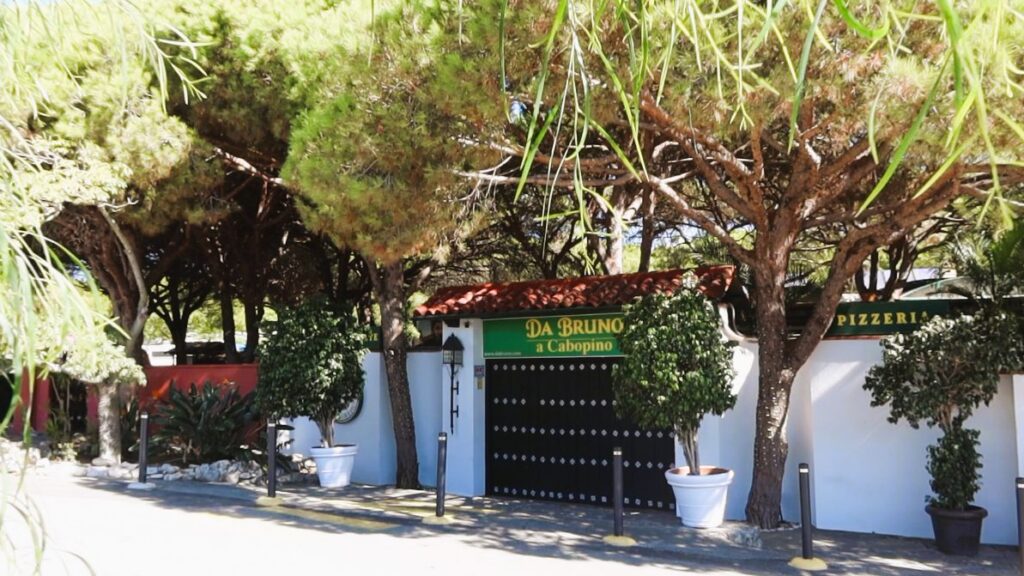
Behind the bridge is Cabopino’s main inland residential pocket. It was mostly built in the 2000s, with urbanisations such as Jardines del Puerto and Las Lomas del Puerto, and it is mainly apartments and townhouses. There is no commercial centre here, just one restaurant, Jaipur Palace. It is an Indian, and Indian restaurants on the Costa del Sol are consistently excellent. From here it is about a 15-minute walk down to the port, which is the nearest thing Cabopino has to a centre, and about nine minutes’ drive from the golf to the port.
The higher you go, the newer the buildings get. Down by the coast Cabopino is established and fairly compact. Up around the golf there is still open land, and that land is the area’s real story. Compared with the rest of Marbella East, very little is left to build on. Cabopino still has plots, and that is why so much of the new build on this side of Marbella is happening here. Current projects include Terrazas de Marbella and Aruna, a scheme of three- and four-bedroom apartments and penthouses inside Cabopino Golf that is now under construction with one apartment left.
Higher still, beside the course, is Green Hill Villas, a gated community of 14 semi-detached houses where Mitchell’s has sold several homes. The plots are on the tight side, but the frontline golf views make up for it.
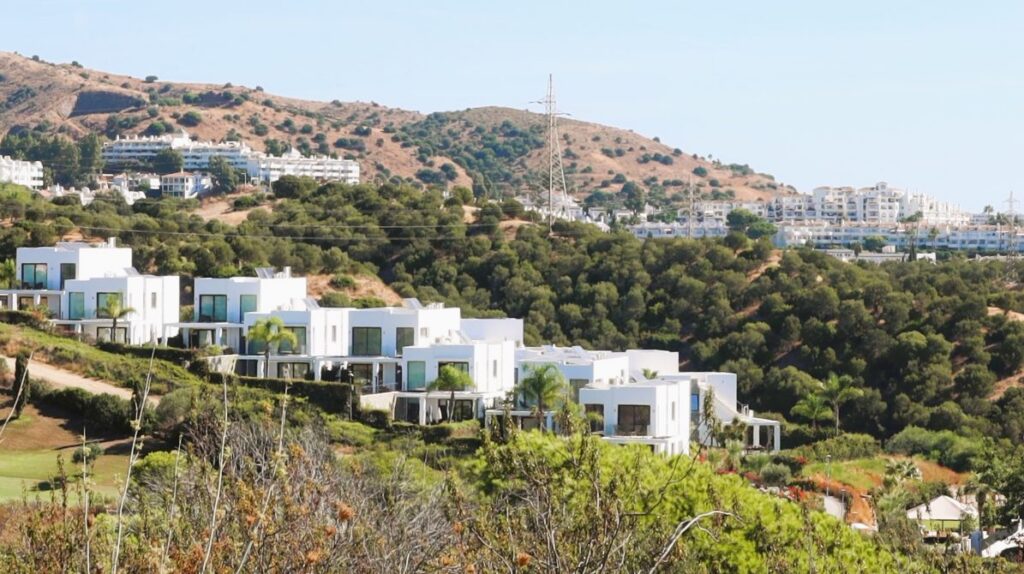
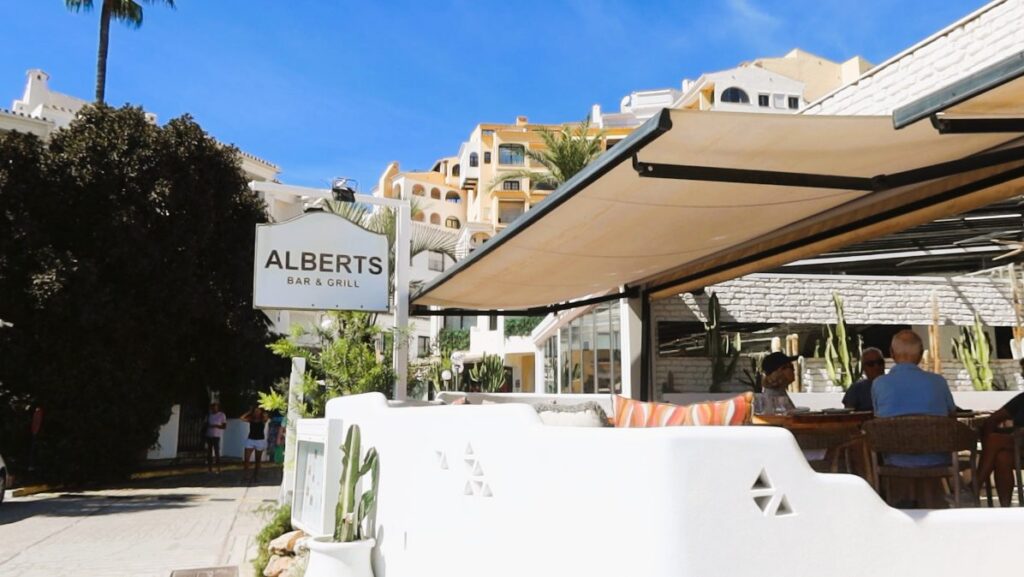
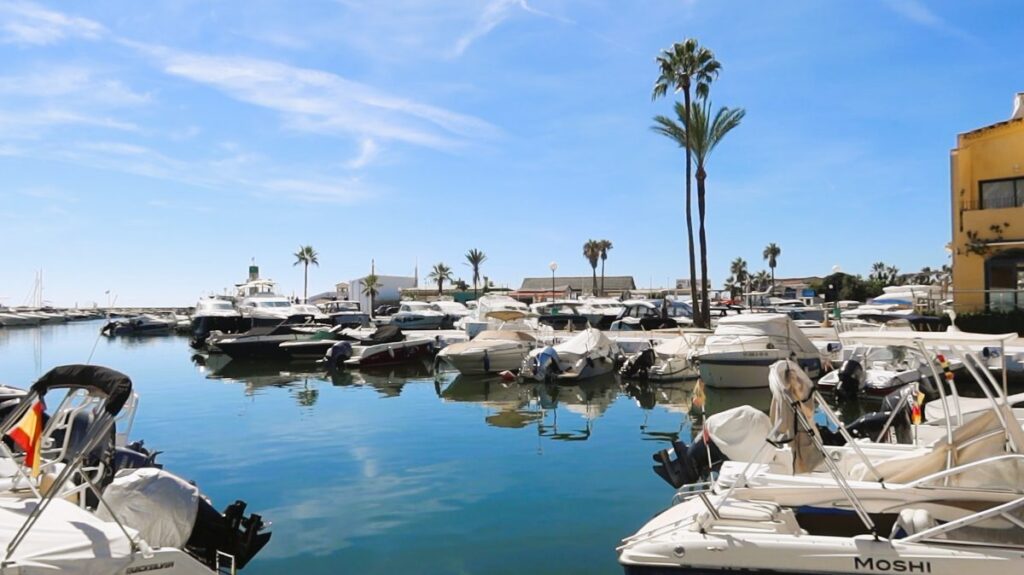
The coast is a different world. Puerto Cabopino is a small marina with 169 berths for boats of 6 to 15 metres. It dates back to the 1970s, when the plan was a small village built around the marina. Unlike Puerto Banús, that is how it stayed: quieter, smaller, and much less well known. There is a barrier and paid parking inside, plus free parking alongside. The main strip has La Despensa de Cabopino, a Spanish local with singers at weekends; Alberts Bar & Grill, a long-standing breakfast, brunch and steak spot; and Jorge’s Bar, which is packed for the football. Around them are souvenir shops, a small supermarket, jet-ski hire and boat trips. It has more in it than you would expect.
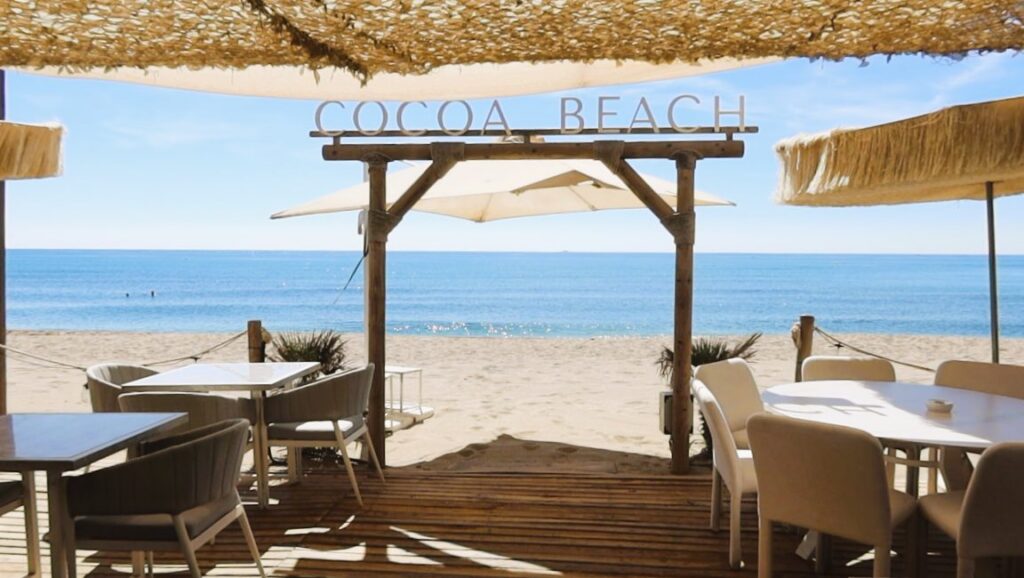
West of the harbour, on the Artola side, Cocoa Beach is the only chiringuito on that stretch of sand. When it opened it was the first high-end beach club in this part of the coast, and it set the standard for what followed. Chris helped open it. It serves comfort food in generous portions, with good service and a relaxed, colourful setting. It costs a little more than the other chiringuitos, and it is worth it.
On the other side of the port is a row of classic chiringuitos. Portofino is Italian with a Mediterranean twist, and La Lonja de Cabopino is a traditional Spanish beach restaurant with live music and events. Sunbeds in front cost around €12. Across from them is Andy’s Beach Bar, with sofas on the sand and live music. It is always busy and service is slow, and nobody seems to mind. Just outside the port, Cabopino’s small square has the village feel of the original plan, with bars and restaurants that get lively after dark.
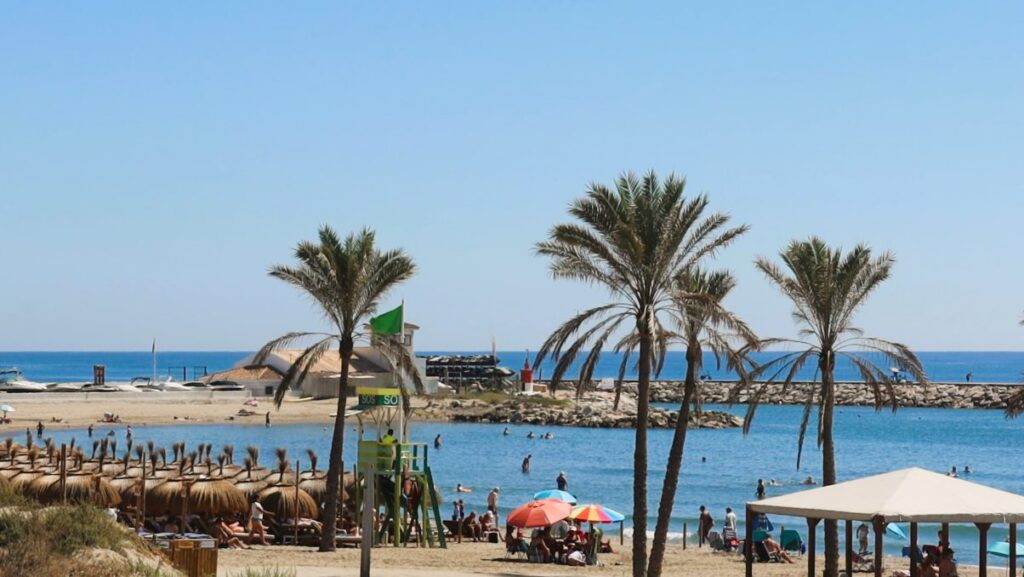
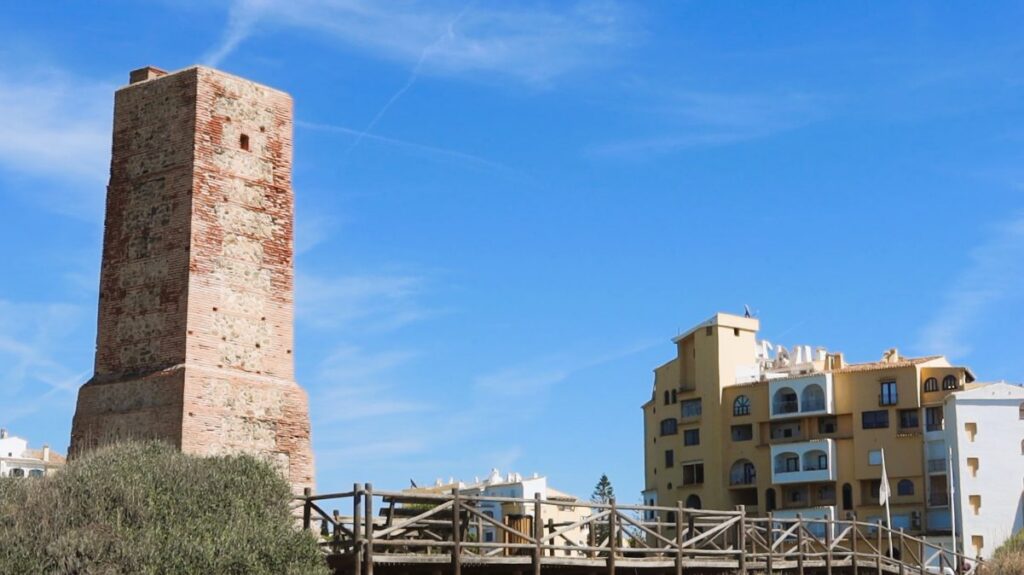
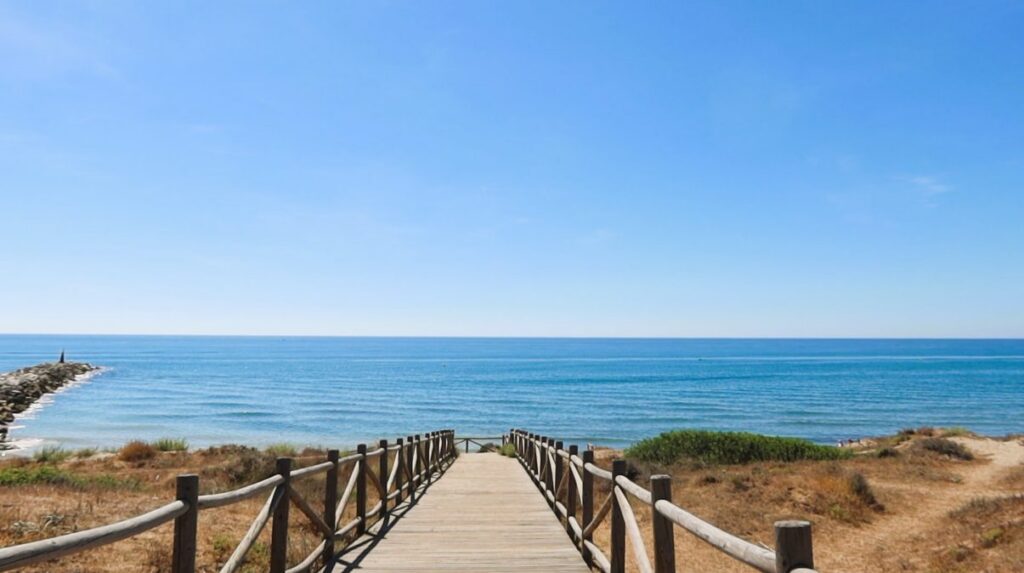
West of the port are the Dunas de Artola. It is the only stretch of Marbella’s coastline that has not been built on. A wooden boardwalk lets you cross without damaging the dunes. At the far end stands the Torre Ladrones, an old coastal watchtower about 15 metres tall. It was once used to warn of raiders from the sea, and it is a nice walk with children.
What property costs in Cabopino
Cabopino has a wider price range than its size suggests. It splits into four markets, and each one behaves differently.
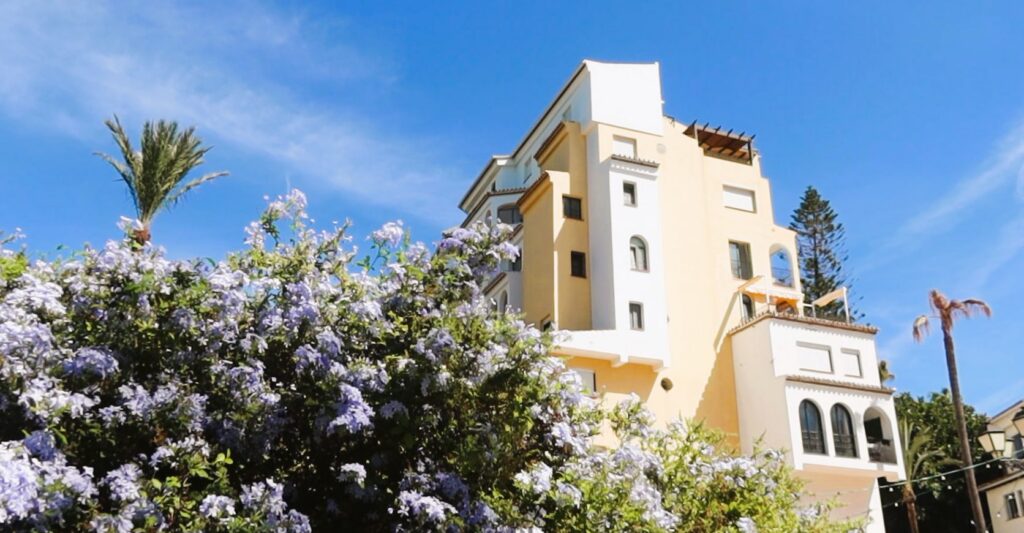
The inland pocket. This is the cheapest way in. The 2000s apartments and townhouses of Jardines del Puerto, Las Lomas del Puerto and the blocks around the bridge are a walk from the marina. Two-bedroom apartments run from about €450,000 to €800,000 and three-bedrooms from about €560,000 to €900,000. Most date from 2001–2005, and many have been refurbished since. The ones worth paying for have sea views, a garden or a refurbished interior.
The harbour. Living in Puerto Cabopino itself costs a little more for the same space, because you are on the marina and the beach. One-bedroom apartments start at around €420,000 to €500,000, two-bedrooms at €600,000, and three-bedrooms at €650,000, with the best positions reaching €900,000. Resale penthouses around the port and the golf start at around €1m.
The golf. This is where Cabopino’s prices step up. A three-bedroom semi-detached house here is typically around €1.35m. At Green Hill Villas, with frontline views over the course, expect €1.3m to €1.5m. The newer contemporary schemes near the port end of the course, where the first holes are, sit higher, at around €1.65m.
New build. Cabopino is where new build on Marbella East is still happening, and prices reflect that. New-build apartments run from around €1.1m to €1.3m. A completed boutique scheme of 14 apartments and penthouses has its last unit at around €1.1m. At Aruna, still under construction inside the golf, the last apartment is around €1.3m.
The beachfront. The handful of villas on the sand are the rarest stock in the area, and owners hold on to them. Expect €3m to €5m, and expect to renovate. Almost everything that comes up needs work, and there are planning limits on what you can do (see below).
| Band | What it buys | Where |
|---|---|---|
| €420,000 – €500,000 | One-bed apartment on the marina | Puerto Cabopino |
| €450,000 – €800,000 | Two-bed apartment or townhouse, walk to the port | Jardines del Puerto, Las Lomas del Puerto |
| €560,000 – €900,000 | Three-bed apartment, larger terraces | Inland pocket and harbour |
| From ~€1,000,000 | Resale penthouse, sea views | Port and golf |
| €1,100,000 – €1,300,000 | New-build apartment | Developments around Cabopino Golf |
| €1,300,000 – €1,650,000 | Three-bed semi-detached house, frontline golf | Green Hill Villas and the golf |
| €3,000,000 – €5,000,000 | Beachfront villa, usually needing renovation | The coast either side of the port |
Current asking prices observed by Mitchell’s Prestige Properties in Cabopino, October 2026. These are asking prices, not a sold-price index. Individual properties vary widely by position, condition and plot.
Browse the Cabopino properties our team has selected
A planning point every beachfront buyer should know. The villas right on Cabopino’s beach sit inside the protection zone set by Spain’s Coastal Law (Ley de Costas). The law is clear: existing houses there can be renovated, but they cannot be knocked down and rebuilt. Chris has watched a client knock on every door along this beach trying to buy, and nobody would sell. Buy one for what it is, knowing you are renovating, not starting again.
Golf, beach, amenities and getting around
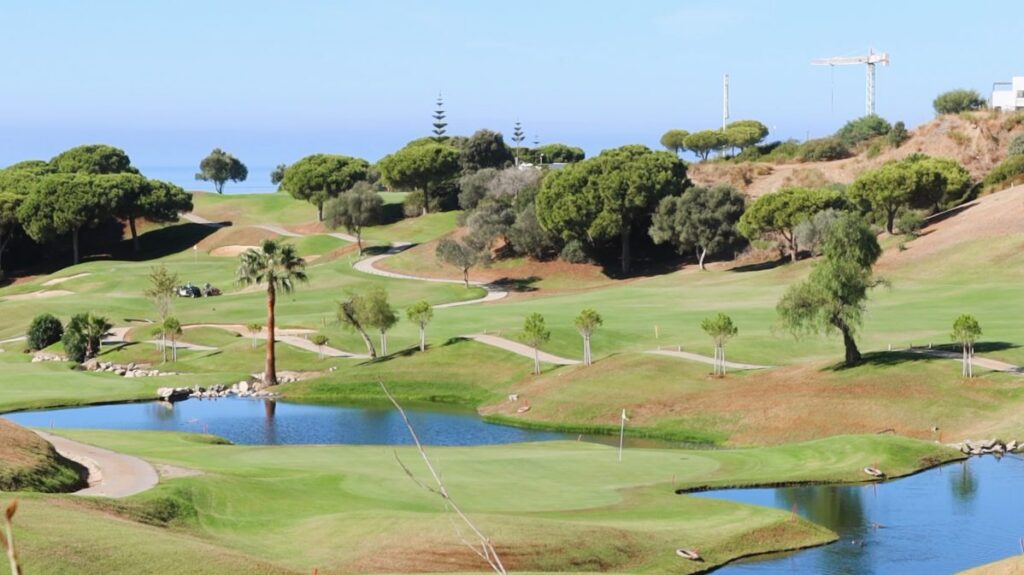
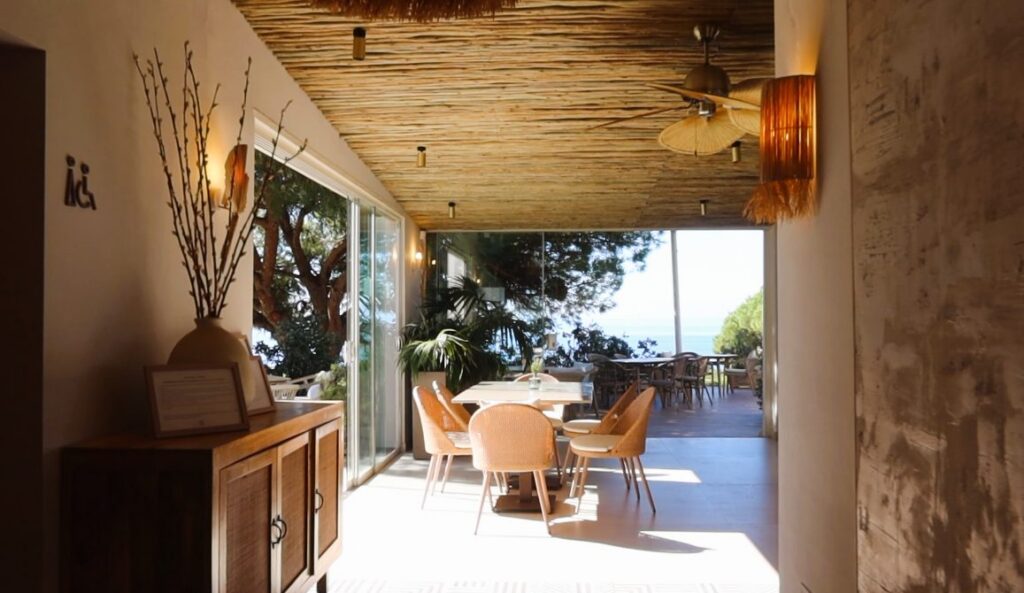
- Golf. Cabopino Golf is an 18-hole, par-71 course designed by Juan Ligués, at the eastern end of Marbella facing the marina. It is short but tight in places, with sea views from the back nine. Locals play it a lot because tee times are easy to get and the club is relaxed about dress and booking. There is plenty of parking too. The clubhouse restaurant, Luma, has just been renovated in a boho style, with open sea and course views. It serves Mediterranean food with something for everyone, from burgers and salads to pil-pil. It opens around 8am and closes around 8pm in summer and 6pm in winter, so a sunset drink is possible in summer.
- Beach. Wide, open sand on both sides of the port. Many people who live on Marbella East rate it among the three best beaches on this side of the city, alongside Elviria and El Rosario. Part of Playa de Artola, west of the port, is clothing-optional.
- The coastal path. The paseo runs east from Cabopino towards Calahonda and on to Fuengirola, so you can walk the dog or cycle along the coast. The Cabopino section is rougher than the finished promenade at Calahonda, and one short gap was still being closed when we filmed.
- Eating. The port strip, the beach chiringuitos and Cabopino Square cover most nights out. Da Bruno a Cabopino sits by the bridge, and Jaipur Palace is the Indian restaurant in the inland residential pocket.
- Shopping. This is the weak spot. The port has a small supermarket and souvenir shops. For a proper weekly shop, Elviria’s commercial centres are a few minutes west and Calahonda’s are a few minutes east.
- Nature and history. The Dunas de Artola were declared a Natural Monument of Andalusia by Decree 250/2003 of 9 September. The Torre Ladrones watchtower has been listed as a Bien de Interés Cultural since 1985.
- Getting around. Direct access to the A-7, with the AP-7 toll road above. Central Marbella is about 10–12 minutes by car, and Málaga airport about 40–45 minutes.
Who Cabopino suits — and who it doesn’t
Cabopino suits golfers who want the course on the doorstep, and people who will use the beach, the dunes and the coastal path every week. It suits buyers who want new build on Marbella East, because this is one of the few places on that side of the city with land left to build on. And it suits anyone who wants a quieter alternative to Elviria, with a marina village close enough to walk to for dinner.
It does not suit people who want everything on foot. There is no commercial centre, the port’s shop will not cover a weekly shop, and everyday errands mean driving to Elviria or Calahonda. With a single bridge between coast and inland, traffic funnels through one point in summer. The port is lively in high season and noticeably quieter in winter. And the most sought-after homes, the beachfront villas, are scarce and cannot be rebuilt. If you want a blank slate on the sand, Cabopino will not give you one.
How Cabopino compares with its neighbours
| Area | Character | Compared with Cabopino |
|---|---|---|
| Cabopino | Marina village, dunes, golf; green and quiet | — |
| Elviria | The most self-sufficient area on Marbella East: three commercial centres, schools, services | Far more on your doorstep, but busier and more built-up. Less new build |
| Calahonda | Large private urbanisation in Mijas Costa, dense and lively | Bigger, busier and in a different municipality. More shops, less space |
| El Rosario | Established villa area, quiet | A villa market rather than a mixed one. No marina, no golf of its own |
| Artola / Marbesa | Small coastal residential pockets between Elviria and Cabopino | Similar coast, but without the port or the golf |
Frequently asked questions
Where is Cabopino?
Cabopino is at the eastern edge of Marbella municipality, past Elviria and Artola and next to Calahonda, which is in Mijas Costa. Central Marbella is about 10–12 minutes away by car, and Málaga airport is about 40–45 minutes along the A-7.
Is Cabopino part of Marbella?
Yes. Cabopino is within the municipality of Marbella, at its far eastern end. Calahonda, immediately to the east, belongs to Mijas Costa. That difference matters for local taxes, council services and the planning rules that apply to a property.
Is Cabopino a good place to live?
For the right buyer, yes. It is green, quiet and close to a marina, a protected dune beach and an 18-hole golf course. The trade-off is convenience: there is no commercial centre, so the weekly shop and most errands mean a short drive to Elviria or Calahonda.
How much does property cost in Cabopino?
Apartments start at around €450,000 for a two-bedroom, rising to €900,000 for the best three-bedrooms. Semi-detached houses on the golf run €1.3m–€1.65m, and new-build apartments €1.1m–€1.3m. The few beachfront villas sit between €3m and €5m. (Mitchell’s observed asking prices, October 2026.)
Is there new build in Cabopino?
Yes. Cabopino is one of the main places on Marbella East where new projects are still going up, because it has open land around the golf course that neighbouring areas lack. Current projects include Terrazas de Marbella and Aruna, inside Cabopino Golf, with new-build apartments typically €1.1m–€1.3m.
Can you rebuild a beachfront villa in Cabopino?
No. The villas on Cabopino beach fall within the protection zone set by Spain’s Coastal Law (Ley de Costas). Existing houses there can be renovated, but they cannot be demolished and rebuilt. That is why most beachfront villas that come up are sold as renovation projects, typically at €3m to €5m.
What is Cabopino Golf like?
Cabopino Golf is an 18-hole, par-71 course designed by Juan Ligués. It is short but tight in places, with sea views. It is popular with residents because tee times are easier to get than at the bigger courses, the club is relaxed, there is plenty of parking, and the clubhouse was recently renovated.
Is Cabopino beach good?
Yes. It is a wide, open sandy beach either side of the port, backed by the protected Artola dunes. Locals regularly rank it among the best beaches on Marbella East. There are traditional chiringuitos by the port, sunbeds from around €12, and a clothing-optional section at Artola.
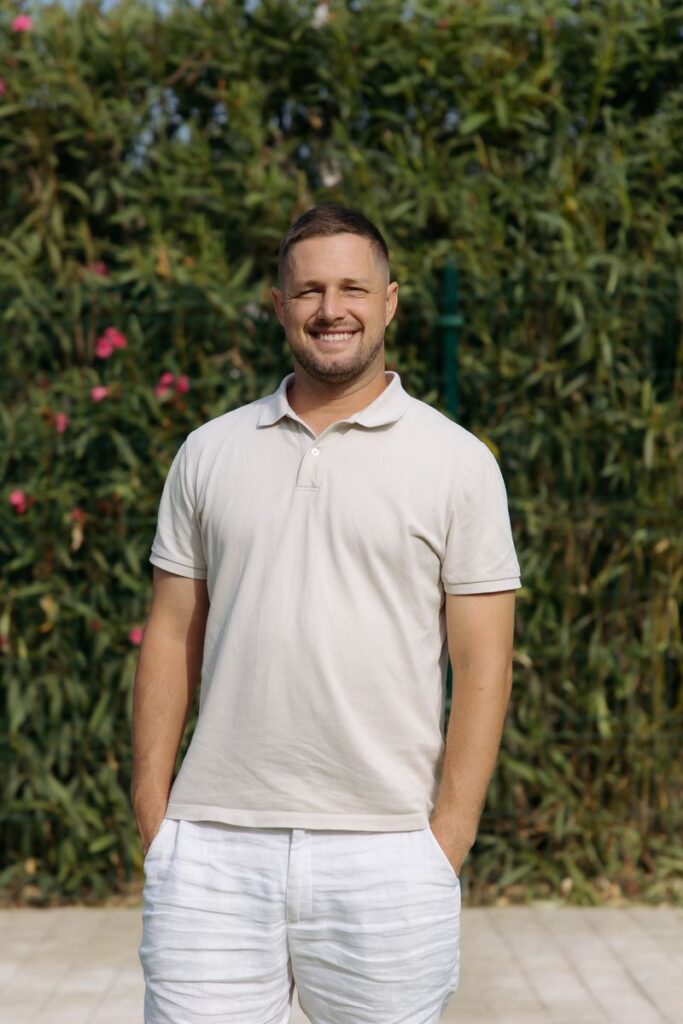
Born in Sweden and raised on the Costa del Sol, Chris has called the Marbella area home for more than twenty years. He came to property after a career in high-end hospitality with Ocean Club and Nikki Beach, and works with clients in English, Spanish and Swedish.
Thinking about Cabopino? Browse the Cabopino properties our team has selected, or arrange a viewing day on Marbella East with Chris.
Last updated: 31 October 2026