
Julian has lived in Marbella since 2009 and has moved between several of its neighbourhoods with his family. His tour starts in Orange Square and follows the coast west, along the Golden Mile to Puerto Banús, with a look up at Sierra Blanca on the way.
Marbella is a city of around 160,000 people on the Costa del Sol, about 50 km west of Málaga airport, with a seafront promenade running roughly 7 km from the Old Town to Puerto Banús. It is several places in one: a whitewashed Old Town, the Golden Mile, Puerto Banús, the golf valley of Nueva Andalucía, San Pedro de Alcántara and the beaches of Marbella East. Average asking prices were €5,967 per m² in September 2026, from about €4,650 in San Pedro to €8,330 on the Golden Mile.
This guide was published in November 2026, and the prices and figures in it reflect the market at that time. Prices move, so ask us for the latest.
Marbella at a glance
| Where | Western Costa del Sol, Málaga province, between Estepona and Mijas. About 50 km from Málaga airport, 35–45 minutes by car |
| Type of area | A real city that works all year, made up of distinct districts: the Old Town and centre, the Golden Mile, Puerto Banús, Nueva Andalucía, San Pedro de Alcántara and Marbella East |
| Property mix | Old Town houses and flats, seafront apartments, gated urbanisations, golf-side homes and large villas in the hills |
| Asking prices | €5,967/m² on average (idealista, September 2026), from ~€4,650/m² in San Pedro and Elviria–Cabopino to ~€8,330/m² on the Golden Mile |
| Best for | Buyers who want a city, a beach and an international community in one place, from full-time families to second-home owners |
| Beach | Beaches along the whole municipality, linked in the centre by the Paseo Marítimo from the Old Town to Puerto Banús |
| Golf | The “Golf Valley” of Nueva Andalucía (Los Naranjos, Aloha) to the west; Río Real and Santa María to the east |
| The trade-off | The highest prices on this part of the coast, summer traffic on the A-7 and the Golden Mile, and a busy, built-up seafront in high season |
What Marbella is actually like
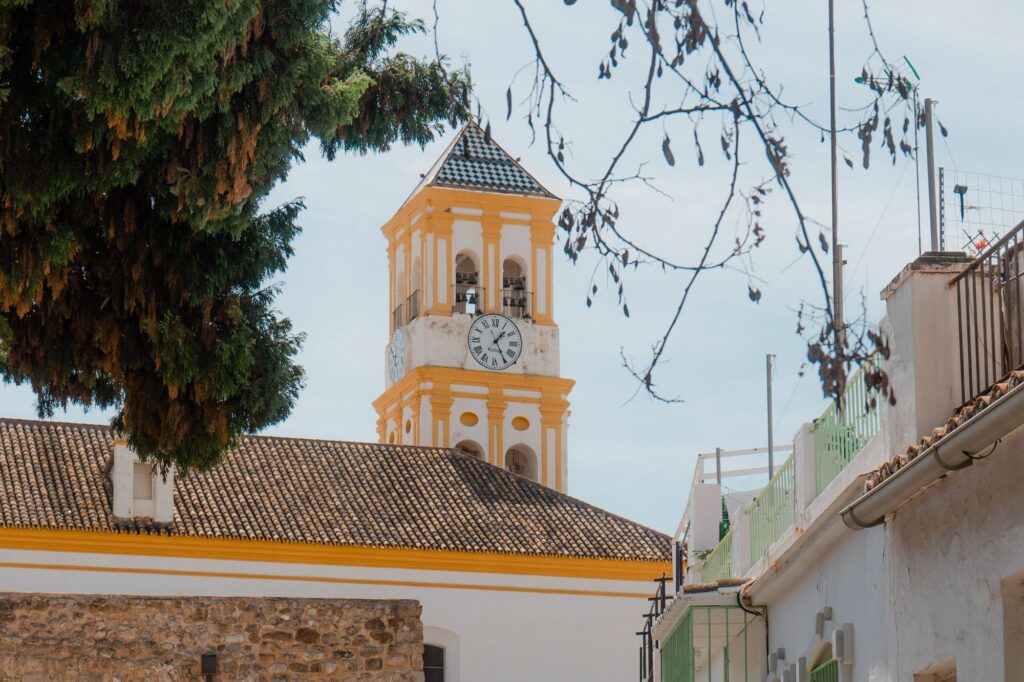
Start where Marbella started. The Plaza de los Naranjos, Orange Square, was laid out after the town passed to the Crown of Castile in 1485, and it is still the heart of the Old Town: white houses, the town hall, café tables and the orange trees that give it its name. Around it, the remains of the Moorish castle walls and a tangle of narrow streets lead to the Plaza de la Iglesia and the church of La Encarnación, a favourite for weddings. The lanes are full of small shops and restaurants, and they are busy most of the year.
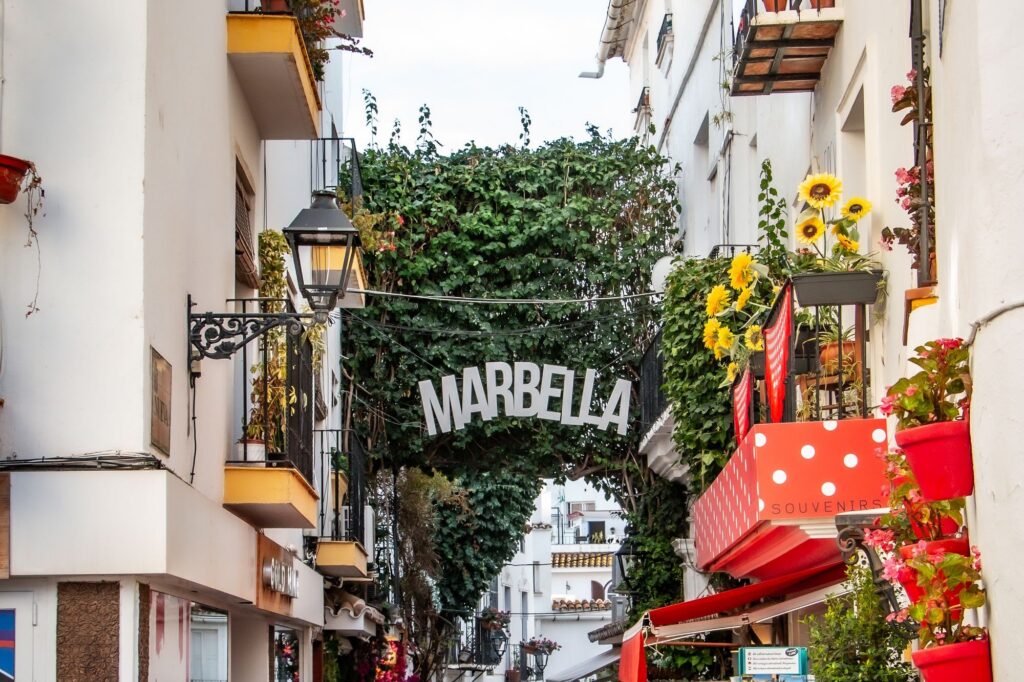
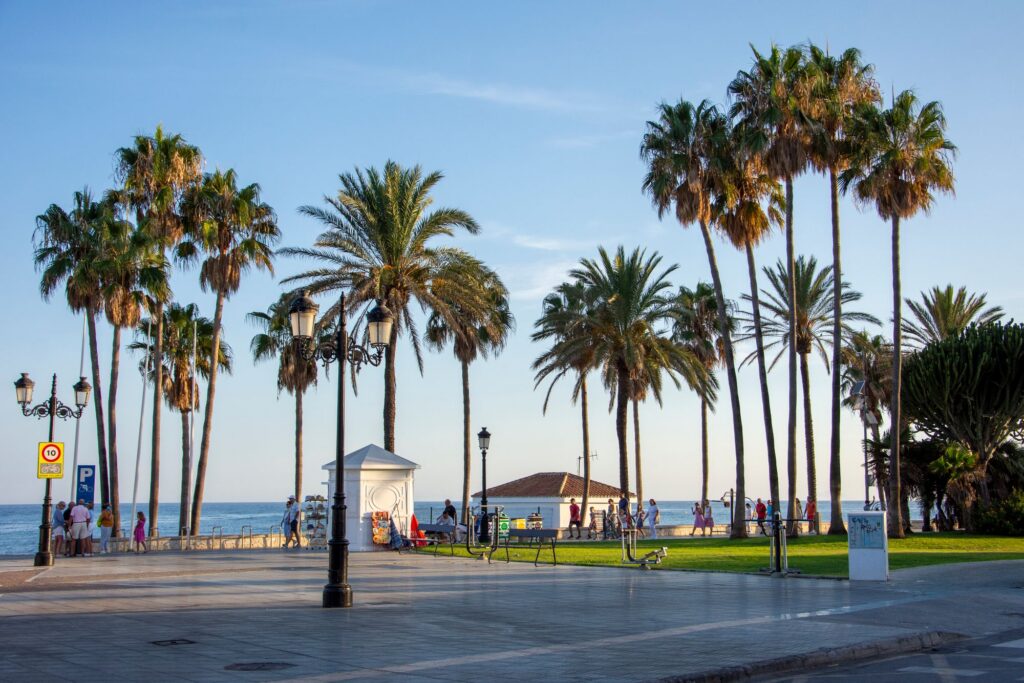
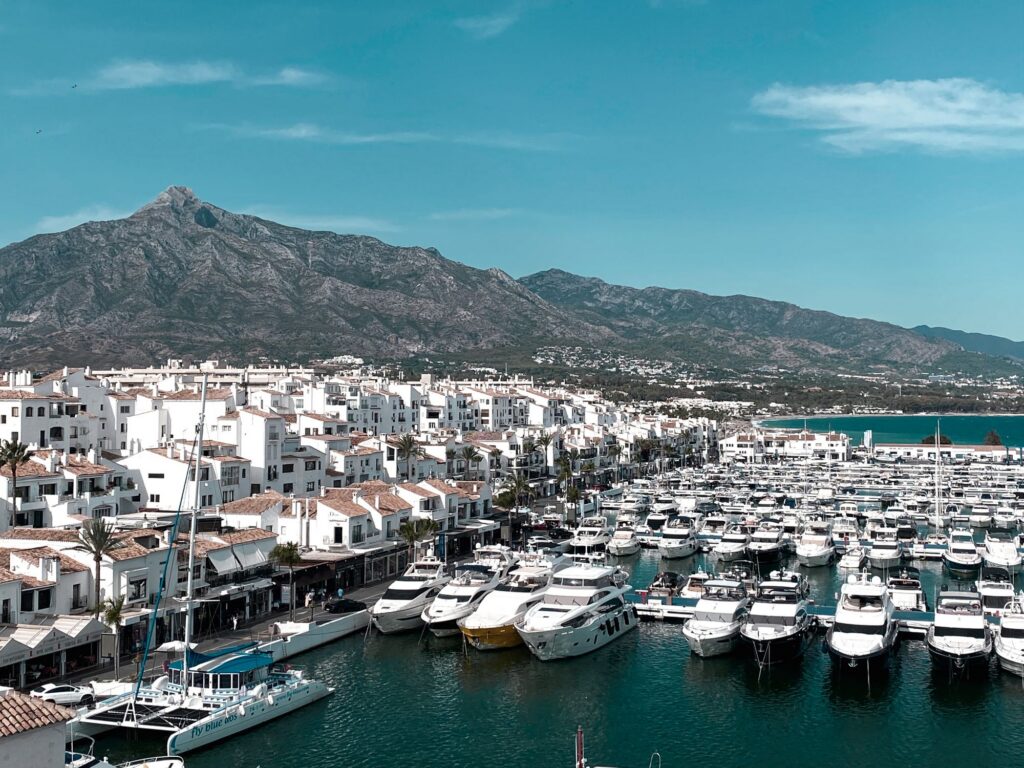
What makes the centre work as a place to live is how close it is to the sea. From the Old Town it is a couple of minutes’ walk down to the Paseo Marítimo, the seafront promenade, with its beaches, bars and chiringuitos. The centre has two harbours: the fishing port of La Bajadilla, where the boats still bring in the day’s catch, and the Puerto Deportivo marina, lined with bars and restaurants. From there the promenade runs about 7 km west to Puerto Banús, and plenty of residents walk, run or cycle it every day.
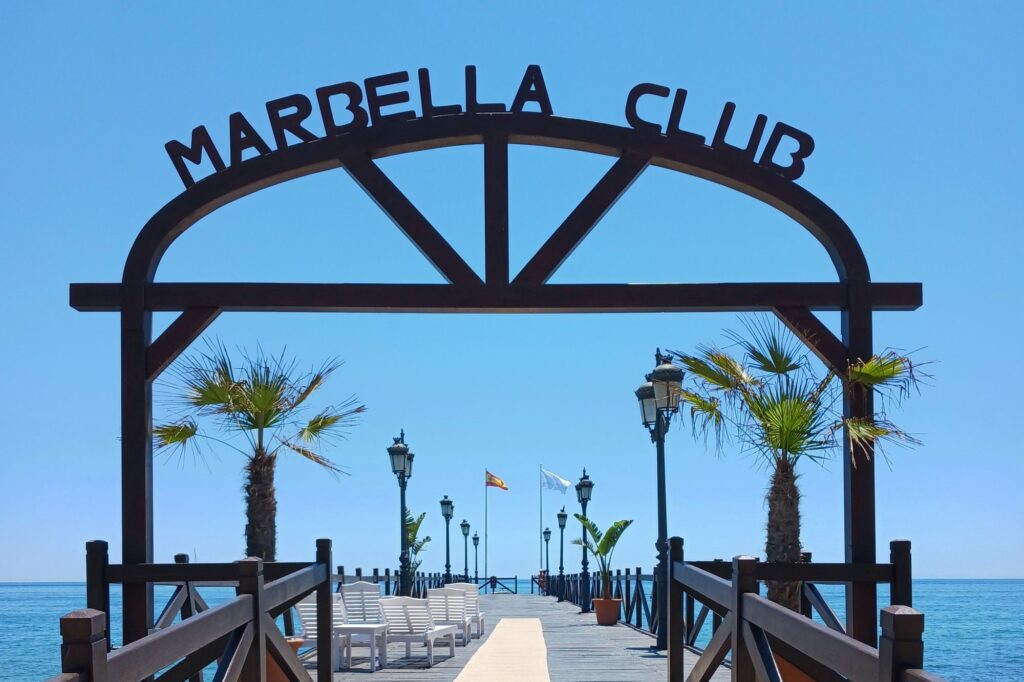
Marbella’s reputation was made in the 1950s. In 1954 Prince Alfonso of Hohenlohe opened the Marbella Club on what became the Golden Mile, the stretch of coast between the town and Puerto Banús, and the international set followed. Puerto Banús opened in 1970. The Golden Mile is still home to two of the coast’s landmark hotels, the Marbella Club and Puente Romano, whose gardens hold a small Roman bridge, along with some of the most valuable seafront homes on the coast and the palace built for the late King Fahd of Saudi Arabia.
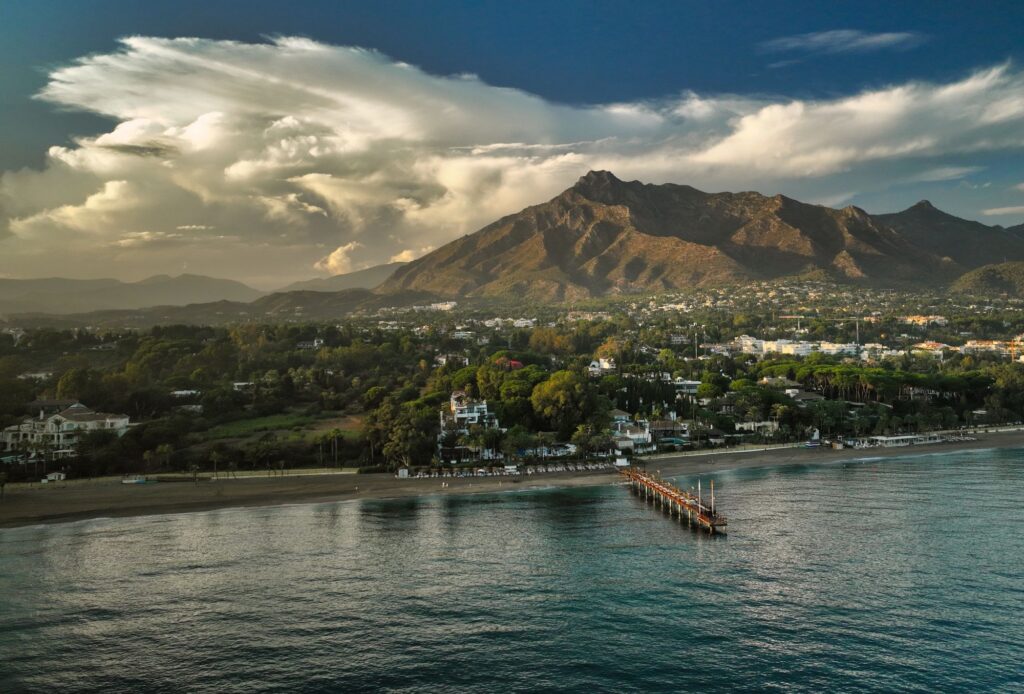
Behind the Golden Mile, under La Concha, is Sierra Blanca, a gated villa area that idealista ranked first in its September 2026 list of Marbella’s most exclusive addresses. Further inland, La Zagaleta, in neighbouring Benahavís, is a private estate of large villas behind a controlled entrance. It is a separate municipality, but it relies on Marbella for almost everything else.
West of Puerto Banús, Nueva Andalucía climbs into the “Golf Valley”, with courses such as Los Naranjos and Aloha, and San Pedro de Alcántara is a town in its own right, with a more local feel and the lowest average asking prices in the municipality. East of the centre, Marbella East is quieter: long beaches, residential urbanisations and a slower pace, and many people who settle there never look anywhere else. We have full guides to Elviria, El Rosario and Cabopino.
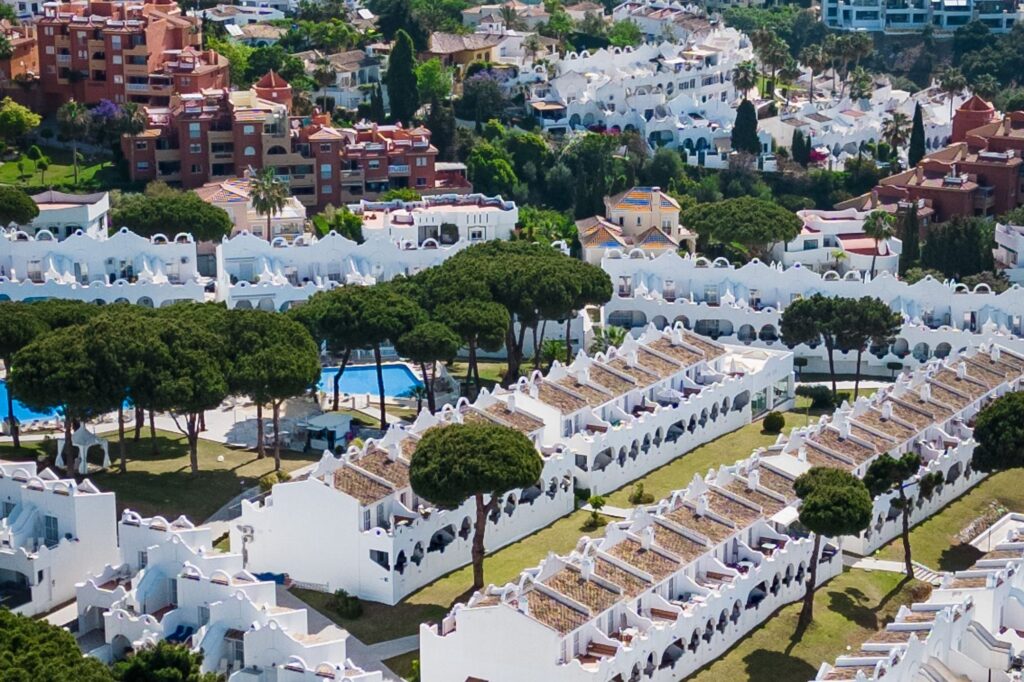
The other thing Julian points to is the people. Marbella has a large international community, and it is easy to fit in: people from all over the world living their lives here, and nobody much minds where you came from.
What property costs in Marbella
Marbella is one of the most expensive property markets in Spain, and prices are still rising. According to idealista’s price report, the average asking price in Marbella was €5,967 per m² in September 2026, up 3.2% on a year earlier. At that average, a 100 m² apartment would be listed at around €597,000. The average hides a wide spread between districts.
| District | Average €/m² | Change on a year | What you find there |
|---|---|---|---|
| Nagüeles–Milla de Oro | €8,331 | +2.1% | The Golden Mile seafront and the Nagüeles hillside |
| Nueva Andalucía | €6,214 | +3.5% | Golf Valley villas, townhouses and apartments |
| Río Real–Los Monteros | €5,610 | −4.1% | Beachfront east of the centre, Los Monteros and Río Real golf |
| Las Chapas–El Rosario | €5,446 | +5.6% | Villa areas and urbanisations of Marbella East |
| Marbella Pueblo | €5,154 | +4.1% | The Old Town, the centre and seafront apartments |
| Elviria–Cabopino | €4,676 | +3.2% | The beach areas at the eastern end of Marbella |
| San Pedro de Alcántara | €4,649 | +5.1% | A town of its own west of Puerto Banús, centre and beachside |
Average asking prices per m² by district, idealista, September 2026. Asking prices, not sale prices, averaged across all property types. The 100 m² example is our own arithmetic.
Two things stand out. The two most affordable districts, San Pedro and Elviria–Cabopino, both reached their highest averages on record in September 2026, and they are rising faster than the Golden Mile. And Río Real–Los Monteros is the only district where asking prices are lower than a year ago.
At the very top, homes on the Golden Mile, in Sierra Blanca and in La Zagaleta can run to tens of millions of euros. Julian, who arrived in 2009 in the middle of the financial crisis, remembers Marbella holding its value better than much of the coast. That is his experience rather than a statistic, but today’s data points the same way: steady growth, month after month, rather than a spike.
Beaches, golf, amenities and getting around
- Beaches. Sand along the whole municipality. In the centre, the Paseo Marítimo links the Old Town beaches to the Golden Mile and Puerto Banús, about 7 km on foot.
- Golf. The “Golf Valley” of Nueva Andalucía, with Los Naranjos and Aloha, to the west; Río Real and Santa María Golf, beside our office in Elviria, to the east.
- Harbours. The fishing port of La Bajadilla and the Puerto Deportivo in the centre, Puerto Banús to the west and Puerto Cabopino at the eastern end.
- Eating and nights out. The Old Town for tapas and small restaurants, the Golden Mile and Puente Romano for high-end dining, and Puerto Banús for late nights.
- Shopping. The Old Town’s boutiques, the designer shops of Puerto Banús, and La Cañada shopping centre for the weekly shop.
- Schools. International schools include Aloha College in Nueva Andalucía.
- Getting around. Málaga airport is about 50 km away, 35–45 minutes by car on the free A-7 or the AP-7 toll road. Inside Marbella, the A-7 and the Golden Mile are slow in summer.
Who Marbella suits — and who it doesn’t
Marbella suits buyers who want more than a resort: a real city with an Old Town, shops, schools and services that run all year, a beach within reach of almost everywhere, and an international community that is easy to join. It suits families who want to live here full-time, second-home owners who want somewhere lively when they arrive, and buyers who see property as a long-term store of value. And because it is so many places in one, it suits very different budgets, from a flat in San Pedro to a villa in Sierra Blanca.
It does not suit buyers looking for a bargain. Marbella is the most expensive municipality on this part of the coast, and the best-known addresses are priced accordingly. It is busy in summer, with traffic on the A-7 and the Golden Mile and crowds in the centre and Puerto Banús. And if you want a quiet village, the city is the wrong choice: look at Marbella East, or inland to Ojén and Benahavís.
How Marbella compares with its neighbours
| Municipality | Average €/m² | Change on a year | Compared with Marbella |
|---|---|---|---|
| Marbella | €5,967 | +3.2% | — |
| Benahavís | €5,602 | +6.5% | Inland and hillier, with La Zagaleta and golf estates. Little in the way of a town centre |
| Estepona | €5,021 | +17.1% | Cheaper on average but rising fastest; a renovated old town and a newer seafront |
| Ojén | €4,226 | +9.4% | A white village in the hills behind Marbella, plus gated hillside communities such as Palo Alto |
| Mijas | €3,717 | +8.5% | The most affordable of the five, from Mijas Pueblo down to Calahonda and La Cala |
Average asking prices per m², idealista, September 2026. The Málaga province average was €4,317/m².
Frequently asked questions
Is Marbella a good place to live?
For most buyers, yes. It is a real city of around 160,000 people with an Old Town, beaches, golf, international schools and services that run all year, plus a large international community. The trade-offs are price, which is the highest on this part of the coast, and summer traffic and crowds.
How much does property cost in Marbella?
The average asking price was €5,967 per m² in September 2026, according to idealista, up 3.2% in a year. It ranges from about €4,650/m² in San Pedro de Alcántara and Elviria–Cabopino to about €8,330/m² on the Golden Mile. At the top end, homes in Sierra Blanca and La Zagaleta run to many millions.
What are the best areas to live in Marbella?
It depends on what you want. The Old Town and centre suit people who want to walk everywhere, the Golden Mile and Sierra Blanca suit buyers at the top of the market, Nueva Andalucía suits golfers, San Pedro offers a more local feel at lower prices, and Marbella East suits people who want beaches and a quieter pace.
What is the Golden Mile?
The Golden Mile is the stretch of coast between Marbella town and Puerto Banús. It grew up around the Marbella Club, opened in 1954, and is home to the Marbella Club and Puente Romano hotels, some of the most valuable seafront homes on the coast, and the highest average asking prices in Marbella: €8,331/m² in September 2026.
How far is Marbella from Málaga airport?
About 50 km, which is 35–45 minutes by car depending on traffic and whether you take the free A-7 or the AP-7 toll road. Puerto Banús is a little further west, and Marbella East a little closer.
Is Puerto Banús part of Marbella?
Yes. Puerto Banús is a marina within the municipality of Marbella, at the western end of the Golden Mile. It opened in 1970 and is known for its yachts, designer shops and nightlife. The seafront promenade links it to Marbella’s centre, about 7 km away.
Are property prices in Marbella still rising?
Yes, but steadily rather than fast. idealista’s average asking price for Marbella rose 3.2% in the year to September 2026, against 6.6% for Málaga province as a whole. The cheaper districts, San Pedro and Elviria–Cabopino, are rising faster than the Golden Mile.
Is Marbella expensive compared with the rest of the Costa del Sol?
Yes. At €5,967/m² in September 2026, Marbella had the highest average asking price of its neighbours, ahead of Benahavís (€5,602), Estepona (€5,021), Ojén (€4,226) and Mijas (€3,717), and well above the Málaga province average of €4,317, according to idealista.
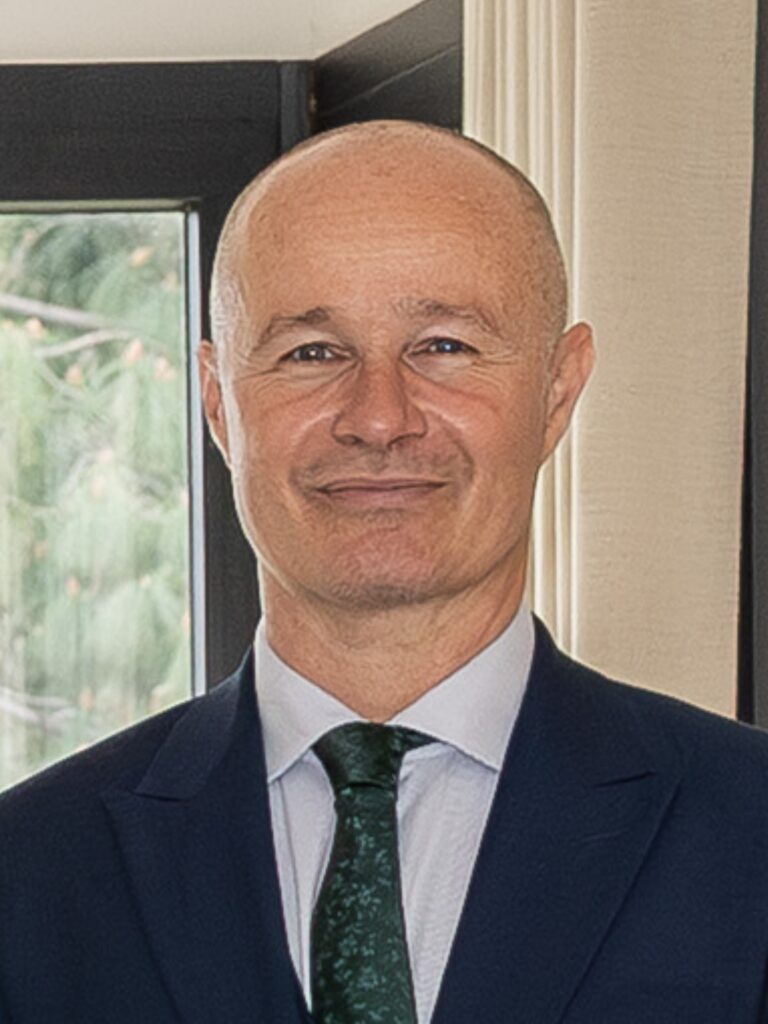
Julian brings more than 25 years of consultative sales experience to the coast. He and his family have lived in several parts of Marbella and Estepona, and he works with clients in English and Spanish.
Wondering which part of Marbella is right for you? Talk to Julian about where to buy in Marbella. He can show you the Old Town, the Golden Mile and Marbella East in a single day.
Last updated: 9 November 2026