
Estepona is the Costa del Sol’s garden town — flat, walkable and still recognisably Spanish, about twenty minutes west of Marbella along the AP-7, with a genuine old quarter and 21 kilometres of coastline. It is calmer and less international than Marbella, and for a long time it was considerably cheaper. That gap is narrowing. The council cleared its debt entirely in 2025, new-build prices reached a record €7,000 per square metre, and Estepona has become one of the Costa del Sol’s fastest-rising property markets.
Estepona at a glance
| Where | Western Costa del Sol, ~20 minutes west of Marbella on the AP-7 |
| Type of area | Authentic year-round Spanish coastal town with a historic old quarter — rather than a purpose-built resort |
| Property mix | Everything from modest town apartments to €7m frontline-beach new-builds; strong off-plan pipeline |
| Prices | Town average €4,961/m² (Aug 2026) · new-build record €7,000/m² (end 2025) · New Golden Mile €6,000–8,000/m² |
| Best for | Buyers who want Spain rather than an expat bubble, and year-round walkable town life |
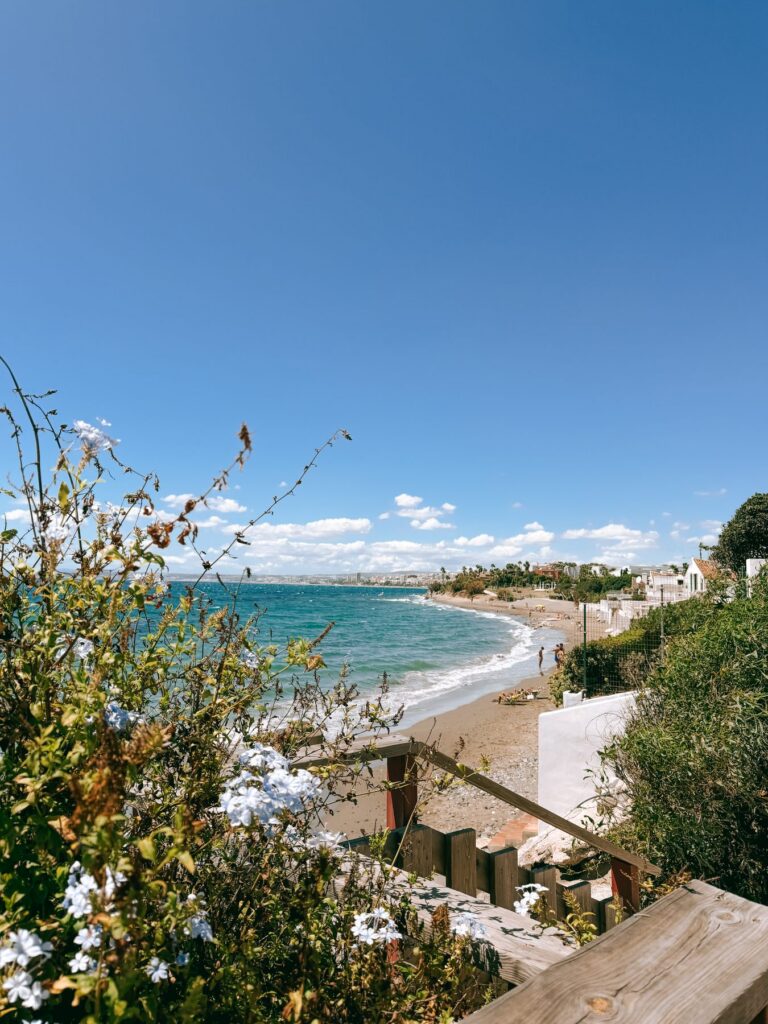
| Beaches | 17 beaches, ~21 km of coast. The marina holds a Blue Flag; the beaches don’t in 2026 |
| Getting around | Unusually flat — genuinely walkable, with cycle lanes along the Paseo Marítimo |
| The trade-off | No big shopping centre, and the largest concentration of international schools is still in Marbella and San Pedro |
Walk it with us first
We spent a day in Estepona — the old town, the Paseo Marítimo, the Puerto Deportivo and the sports city in the north-west. Everything below comes from that visit, plus the published market data.
What Estepona is actually like
The first thing you notice is that it is a town, not a development. People live here all year, the businesses are mostly privately owned rather than chains, and the old quarter is a working part of the place rather than a preserved one.
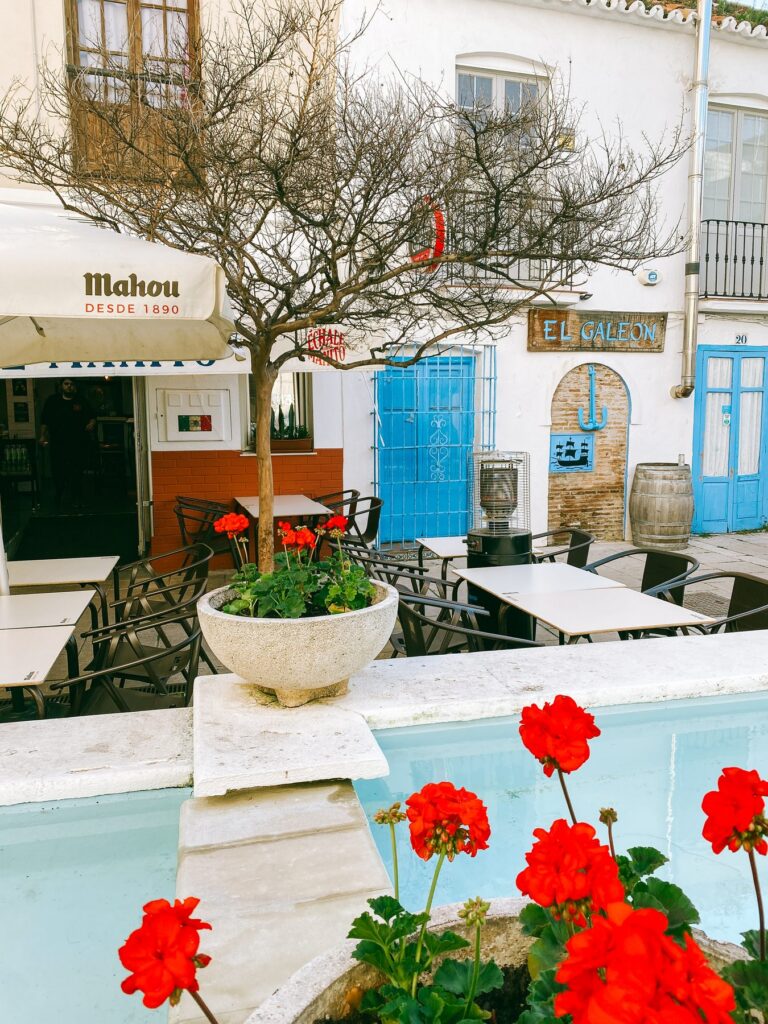
That old quarter genuinely rivals Marbella’s, and it has something Marbella’s doesn’t: room. On an ordinary day it doesn’t feel overrun. The nickname — the garden town of the Costa del Sol — earns itself the moment you walk into it. Flowers in pots line the narrow streets, on almost every doorstep, and the effect is cumulative rather than decorative.
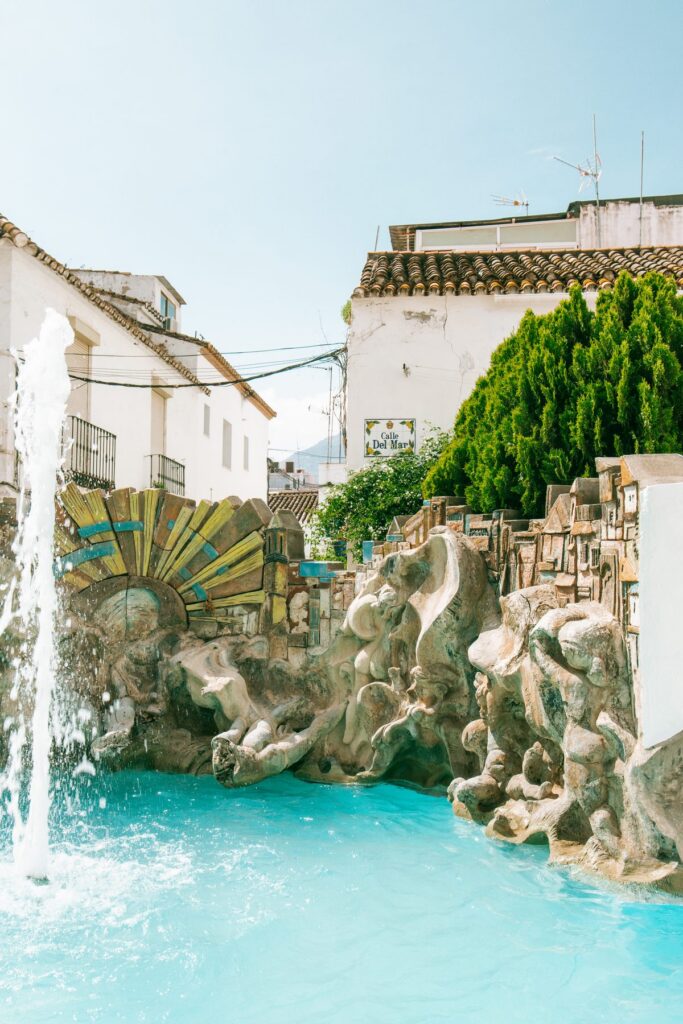
Twenty-five metres from that traditional centre, you’re into a town that has been comprehensively rebuilt: a new town hall, new sports facilities, resurfaced streets and steadily more parking. The two things sit closer together than you’d expect, and the contrast is the point — this is a town investing heavily in itself without hollowing out what was already there.
Behind the centre runs the Paseo Marítimo, which is where Estepona makes its strongest case. It’s long, it’s flat, it has proper cycle lanes, and it is busy with people using it rather than photographing it. The whole town is flat, in fact, which matters more than it sounds: if you want somewhere you can still get around on foot in fifteen years, that is a genuinely short list on this coast.
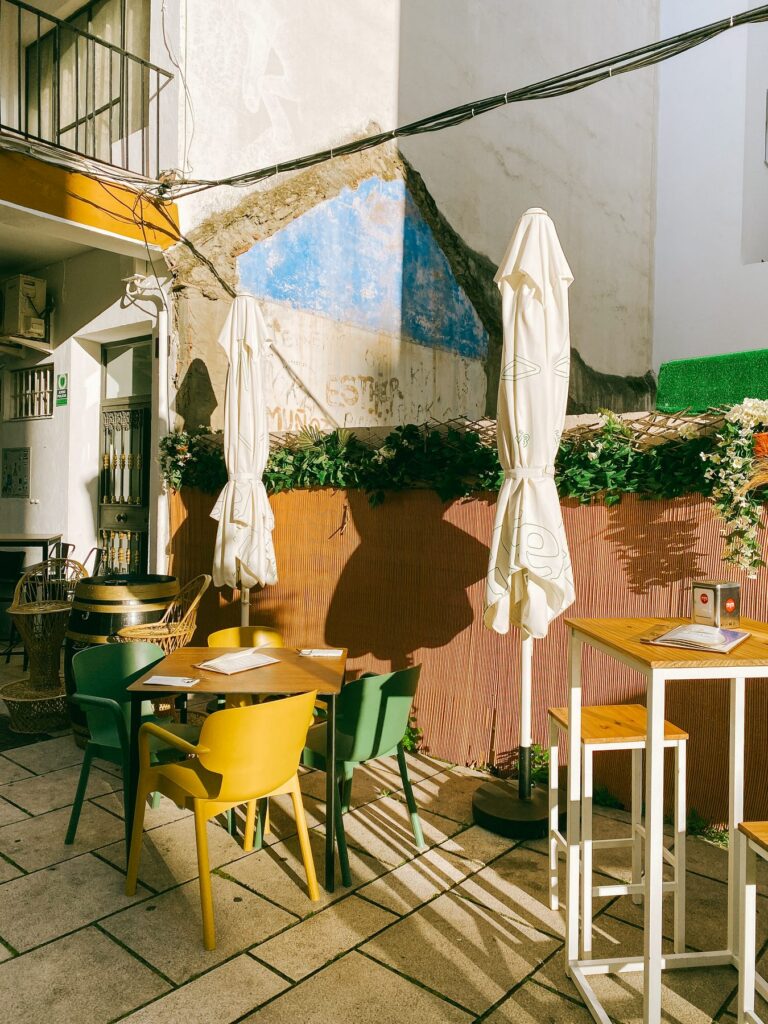
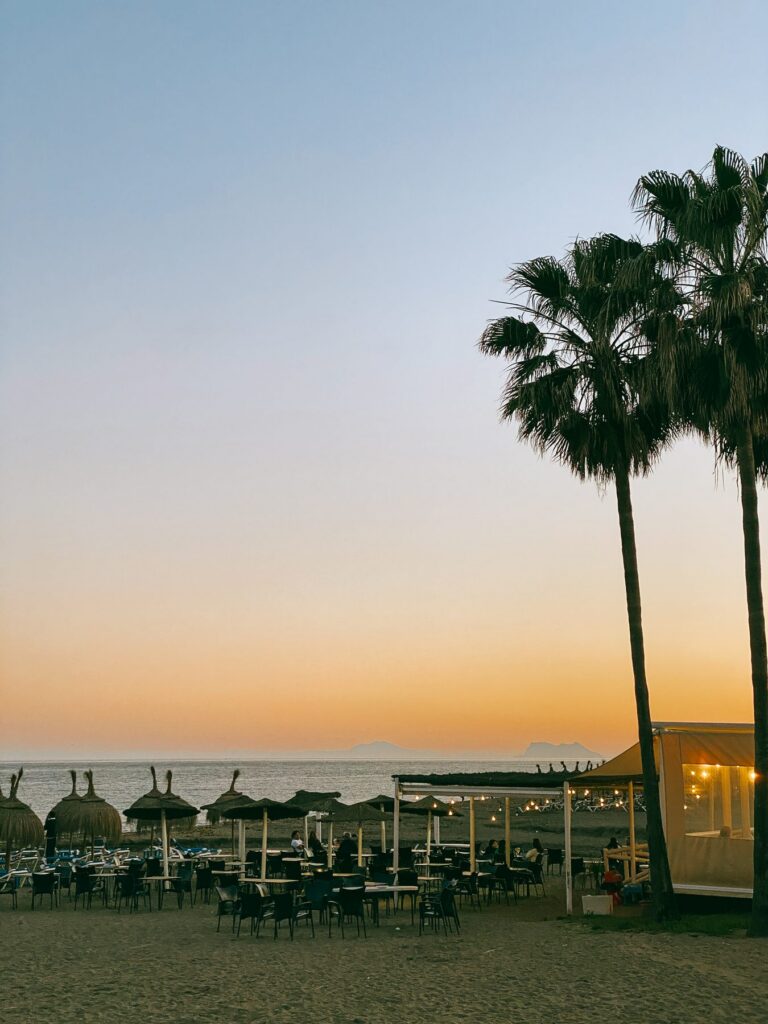
West along the front is the Puerto Deportivo, the marina, which does the evening trade — a run of bars and restaurants that catch the sunset. Beside it is the fishing harbour, where the boats still land and the public can buy fish in the morning alongside the restaurants. That combination is rarer on the Costa del Sol than it used to be.
Further out, Estepona has the things that make a town liveable rather than merely pleasant. Selwo Aventura, the safari park, and the Orquidario, the orchid house and botanical garden with its waterfall and tropical plantings, are both genuine days out. In the north-west, the Ciudad Deportiva holds a football stadium for the local club and an athletics stadium of a standard that hosts national competitions.
What Estepona doesn’t have is the retail. There is no large commercial centre of the sort Marbella and Puerto Banús offer, and far fewer international brands. Whether that’s a loss or the entire appeal depends on why you’re moving.
What property costs in Estepona
Estepona is the clearest price story on the coast right now, and unusually it’s a documented one.
The municipality-wide average reached €4,961 per square metre in August 2026, up 17.4% year on year and the highest figure recorded for the town. Estepona Pueblo itself sits lower, at €4,400/m² — the municipal average is pulled upward by the New Golden Mile and the frontline developments, so which Estepona you are buying in matters more than the headline number. The town still trades below Marbella, but at that rate of growth the gap has been closing quickly.
At the top end the numbers are sharper. New-build prices hit a record €7,000 per square metre at the close of 2025, and the New Golden Mile — the stretch running east toward San Pedro — trades between €6,000 and €8,000 per square metre.
| Segment | Price | Source |
|---|---|---|
| Municipality average | €4,961/m² (August 2026) | Idealista |
| Estepona Pueblo | €4,400/m² (August 2026) | Idealista |
| Annual growth to August 2026 | +17.4% | Idealista |
| New-build record | €7,000/m² (end 2025) | Idealista, February 2026 |
| New Golden Mile | €6,000–€8,000/m² | Idealista, February 2026 |
| Frontline-beach developments | €2.5m–€7m, largely off-plan | Current asking prices observed by Mitchell’s Prestige Properties, 2026 |
If you want to see what that looks like in practice, we currently market 78 properties across Estepona and the New Golden Mile — new developments, apartments, penthouses, townhouses, villas and plots, with prices and floor plans for each.
The market still has a genuine entry point, which is the part most coverage misses. Estepona is not yet a single price band — you can buy a modest apartment in the town and you can buy a €7m frontline duplex, and both are Estepona. That breadth of pricing remains one of Estepona’s distinguishing features.
Why it’s moving. Estepona ended 2025 with zero municipal debt and a €40.29 million budget surplus — a genuine first for the town. According to the council, the reductions introduced over recent years have resulted in an accumulated 50% reduction in residents’ IBI bills. For 2026 the municipality approved a record budget of €132 million. That is the mechanism behind the flowers, the paving and the stadiums, and it’s the reason the investment case here is about more than sea views.
Amenities, beaches and getting around
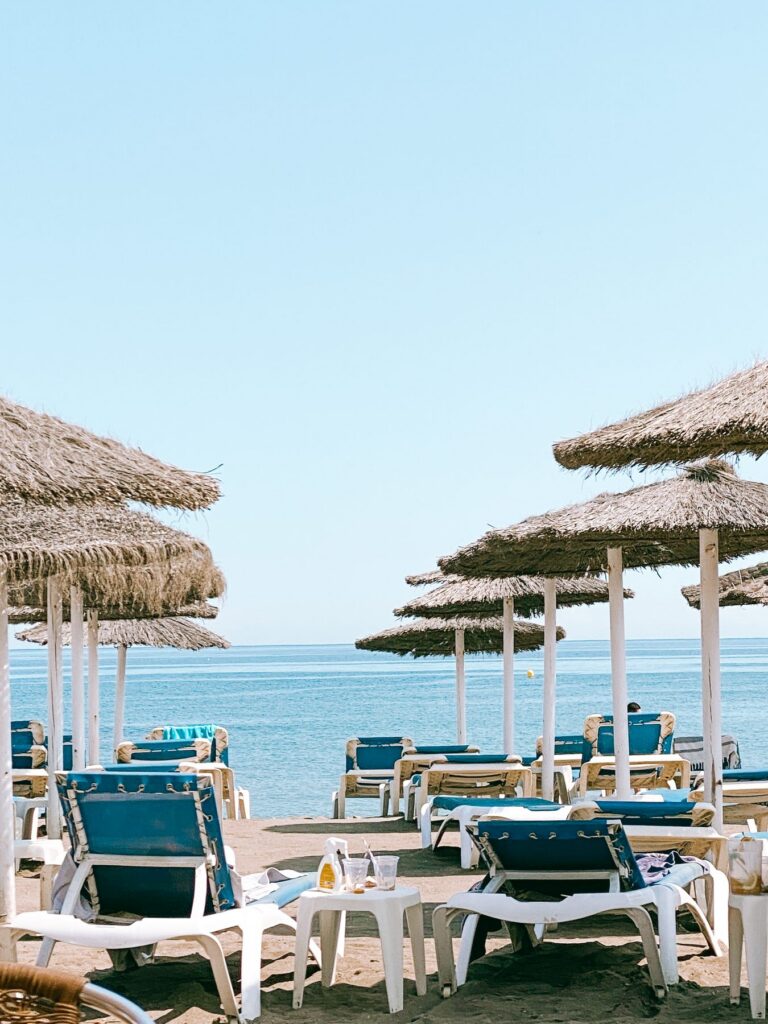
- Beaches — 17 beaches along roughly 21 km of coast. Note: Estepona’s beaches do not hold Blue Flag status in 2026. The Puerto Deportivo does, and has for 32 consecutive years. Blue Flag status is assessed annually, and no reason for the change at beach level has been published.
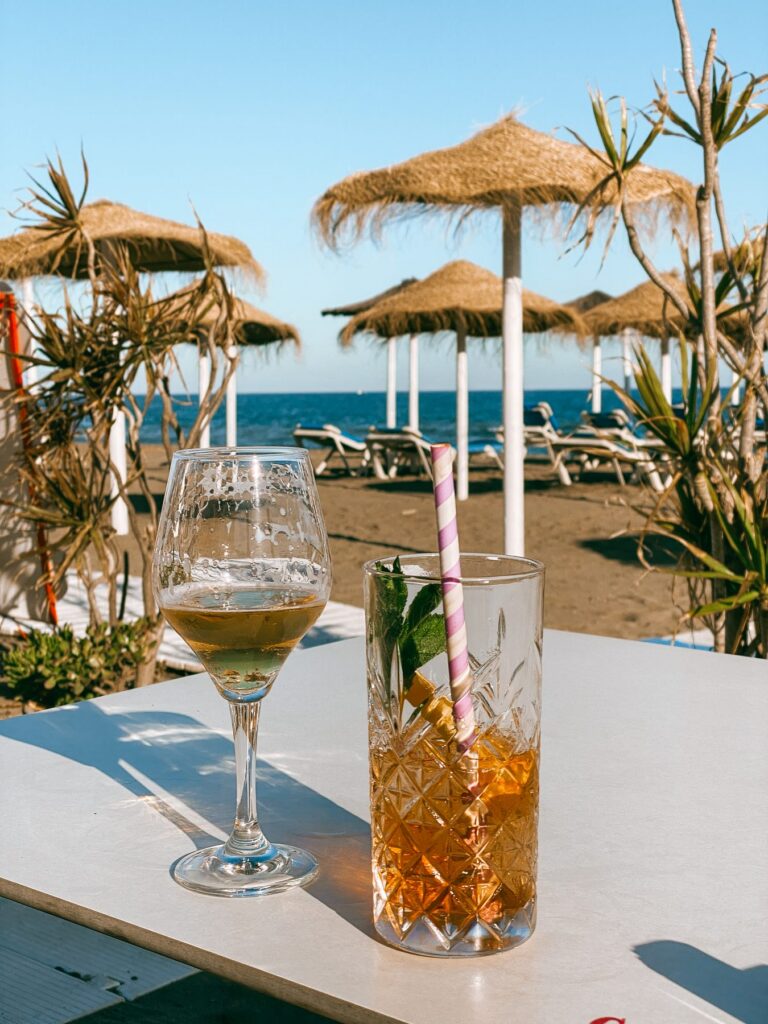
- Eating and evenings — the old town for lunch, the Puerto Deportivo for sunset and dinner, the fishing harbour for fish that landed that morning
- Family days out — Selwo Aventura safari park; the Orquidario orchid house and botanical garden
- Sport — Ciudad Deportiva in the north-west: football stadium and a national-standard athletics stadium
- Walking and cycling — a flat town with cycle lanes running the length of the Paseo Marítimo
- Retail — no large shopping centre. Marbella and Puerto Banús are about 20 minutes east on the AP-7
- International schools — Estepona has its own, which is not the usual assumption: Mayfair International Academy (British curriculum, ages 3 to 18), Colegio San José in the town centre (bilingual, through to the International Baccalaureate Diploma) and the International School of Estepona at El Paraíso on the New Golden Mile. Colegio Internacional Atalaya sits on the Estepona–Marbella boundary
- Roads — the AP-7 toll road and the A-7 coastal road both serve the town. Málaga airport is roughly 82 km away, about a 50-minute drive
Who Estepona suits — and who it doesn’t
It suits people who want to live in Spain rather than beside it. The town works in February as well as August, the businesses are local, and daily life doesn’t require a car for everything — which, on this coast, is close to a luxury. It suits buyers who want the price range still to have a bottom as well as a top. And it suits anyone who finds Marbella a bit much but wants to be twenty minutes from it.
It does not suit someone who wants the full international infrastructure on the doorstep. The big retail is in Marbella, the deepest concentration of international schools is in Marbella and San Pedro, and if your social life runs on Puerto Banús you will be commuting to it. The beaches losing their Blue Flags for 2026 is worth asking about locally rather than shrugging off. And the value argument is weakening by the quarter — at 16% annual growth, “Estepona is the affordable option” has a shelf life.
How Estepona compares
| Town | Character | Prices | Compared with Estepona |
|---|---|---|---|
| Estepona | Authentic year-round Spanish town, flat, historic old quarter | €4,961/m² average (Aug 2026) | — |
| Marbella | Larger, far more international, full retail and schools | Higher than Estepona | More expensive, busier, better served |
| San Pedro de Alcántara | Town feel, closer to Puerto Banús | Comparable to higher | Similar in spirit, less coastline, nearer the glitz |
| Sotogrande | Gated, polo and golf, very private | Higher | Far more exclusive and much quieter; not a town |
| Manilva / Casares | Quieter, less developed, west along the coast | Lower | Cheaper and calmer; fewer amenities and less momentum |
Frequently asked questions
Is Estepona a good place to buy in 2026?
The case is stronger than it has been. The municipality-wide average reached €4,961/m² in August 2026, up 17.4% year on year, the council closed 2025 debt-free with a €40.29m surplus, and it reports an accumulated 50% reduction in residents’ IBI bills. The counter-argument is simply that much of the value gap to Marbella has already closed.
How much does property cost in Estepona?
The municipality-wide average was €4,961 per square metre in August 2026, with Estepona Pueblo itself at €4,400/m². New-builds reached a record €7,000/m² at the end of 2025, and the New Golden Mile trades at €6,000–€8,000/m². Frontline-beach developments run from around €2.5m to €7m, mostly off-plan. (Idealista, August 2026, plus current asking prices observed by Mitchell’s Prestige Properties, 2026.)
Is Estepona better than Marbella?
They’re different propositions rather than better and worse. Estepona is flatter, quieter, more Spanish and slightly cheaper, with a stronger old town and no big retail. Marbella has the larger concentration of international schools, the shopping and the nightlife. They’re twenty minutes apart, which is the real answer — most buyers use both.
Do Estepona’s beaches have Blue Flags?
Not in 2026. The beaches don’t currently hold the certification, though the Puerto Deportivo marina does and has for 32 consecutive years. Blue Flag status is assessed annually, and no reason for the change at beach level has been published. Marbella has eight flagged beaches if the certification matters to you.
Why has Estepona become so popular?
Sustained municipal investment is the honest answer. The council cleared its debt in 2025, approved a record €132m budget for 2026, and has rebuilt the town hall, the sports facilities and much of the public realm — while, on its own figures, cutting residents’ IBI bills by an accumulated 50%. The flowers and the paving are visible; the balance sheet behind them is why they keep coming.
Is Estepona walkable?
Unusually so. The town is flat, which is rare on this coast, and the Paseo Marítimo runs the length of the front with proper cycle lanes. Day-to-day life in the centre genuinely doesn’t require a car.
Are there international schools in Estepona?
Yes — more than most buyers expect. Mayfair International Academy teaches the British curriculum from 3 to 18 in Estepona. Colegio San José, in the town centre, runs a bilingual programme through to the International Baccalaureate Diploma. The International School of Estepona follows the English National Curriculum at El Paraíso on the New Golden Mile, and Colegio Internacional Atalaya sits on the Estepona–Marbella boundary. The largest concentration of international schools is still around Marbella and San Pedro, about twenty minutes east, but families buying in Estepona do not have to make that drive.
What is there to do in Estepona with children?
Selwo Aventura, the safari park, and the Orquidario — an orchid house and botanical garden with a waterfall and tropical plantings. The Ciudad Deportiva has a football stadium and a national-standard athletics track, and the beaches and Paseo Marítimo carry most of the everyday load.
Thinking about Estepona?
See property for sale in Estepona
Arrange a viewing trip to Estepona

About the author
Julian Fuller
Senior Property Consultant · Mitchell’s Prestige Properties
Julian presented this guide, walking Estepona from the old town to the Puerto Deportivo.
A Marbella resident since 2009, Julian brings more than 25 years of consultative sales experience and extensive first-hand knowledge of Marbella, Estepona and the western Costa del Sol. Having lived with his family in several locations across both Marbella and Estepona, he understands the differences between the areas from a property and a lifestyle point of view. He enjoys being part of the team and building lasting relationships with his clients, in English and Spanish.
Talk to Julian about your search