
Calahonda is the Costa del Sol’s largest private urbanisation and one of its best-value coastal addresses. It sits in the municipality of Mijas — not Marbella — on the stretch between Cabopino and Riviera del Sol, roughly midway between Marbella and Fuengirola. It is 300 hectares, 6,155 homes and around 150 shop units, built into pine woodland from 1963 onwards and still maintained by its own residents’ body. Semi-detached houses sell from about €500,000 and detached villas run from roughly €1.2m to €2m.
This guide was published in November 2026, and the prices and figures in it reflect the market at that time. Prices move, so ask us for the latest.
Calahonda at a glance
| Where | Mijas Costa, between Cabopino and Riviera del Sol, about 13 km east of Marbella and 30 minutes from Málaga airport |
| Type of area | A private urbanisation of 300 hectares, not a town: 140 sub-communities, no historic centre, four commercial centres instead |
| Property mix | Mostly 1960s–1990s apartments near the beach, semi-detached houses mid-slope, detached villas on the larger inland plots |
| Asking prices | Semi-detached houses from around €500,000 · detached villas roughly €1.2m–€2m (observed by Mitchell’s, September 2026) · apartments from around €330,000 inland and €550,000 on the beach side (our listings, November 2026) |
| Best for | Year-round residents who want space, sport and amenities without Marbella prices |
| Beach | Its own 2 km of sand, with the Mijas coastal path running the length of it |
| Golf | Club de Golf La Siesta, nine holes, inside the urbanisation |
| The trade-off | It is a development, not a town. Much of the beachfront stock is fifty years old, and owners pay a conservation charge on top of the usual costs |
Drive it with us first
Chris usually presents these guides on his own. For Calahonda he brought Tim Wheelwright, who bought a house here in 2019 and has lived in the urbanisation ever since — which is why the tour spends as long on which café does breakfast as it does on which street sells.
What Calahonda is actually like
The first thing you notice driving in is how green it is. Calahonda was laid out through existing pine woodland and the pines are protected, so the density is far lower than the coast either side of it — the urbanisation keeps roughly 600,000 m² of green space, about a fifth of its total area. Tim’s line to clients is that when you start seeing these particular trees, you know you have arrived. It reads as suburban rather than resort: wide streets, low-rise apartment blocks, detached houses behind hedges, and very little that is more than three storeys.
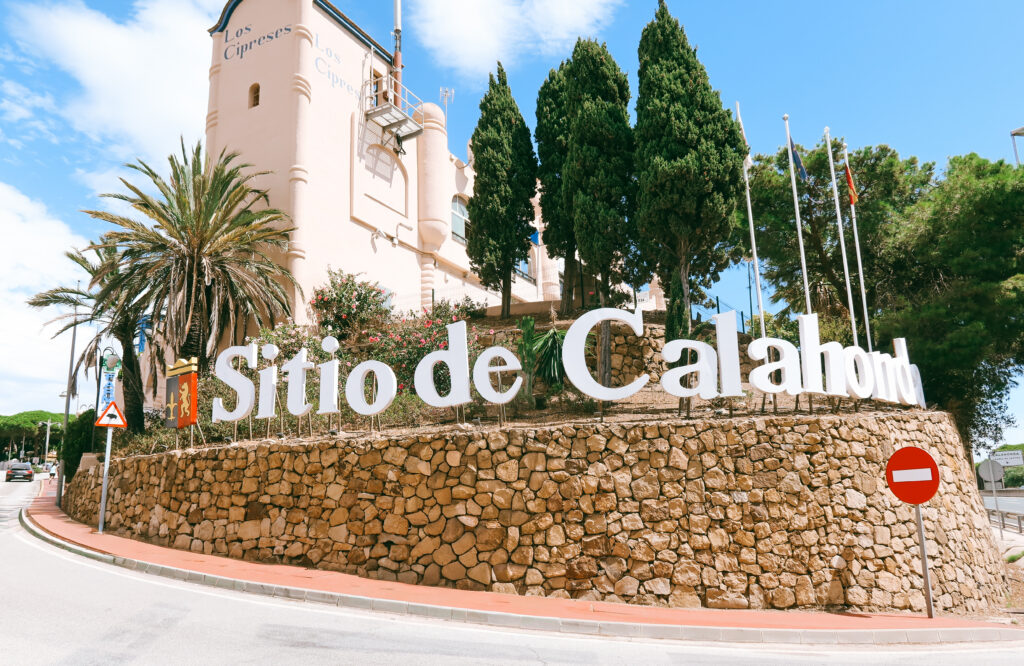
The spine is Avenida España, which runs from the coast road up through the middle of the urbanisation. The lower stretch of it is known locally as The Strip — bars, supermarkets and souvenir shops, old school and rough at the edges, quiet by day and busy at night. It is not representative of Calahonda and it puts some buyers off on a first drive-through, which is a shame, because 200 metres uphill the character changes completely.
Above The Strip the urbanisation breaks into pockets, each with its own feel. Calle Van Dulken, opposite the Oxygen sports centre, is a wide cul-de-sac of detached villas named after one of the original landowners; we have helped three clients buy in that one street in recent years, all within a few doors of each other. Calle Don José Orbaneja, named for the family who developed Calahonda from 1963, runs down to the golf course with semi-detached houses along one side. Keep climbing and you reach the top communities, where the plots get bigger, the traffic disappears and the views open out over the coast.
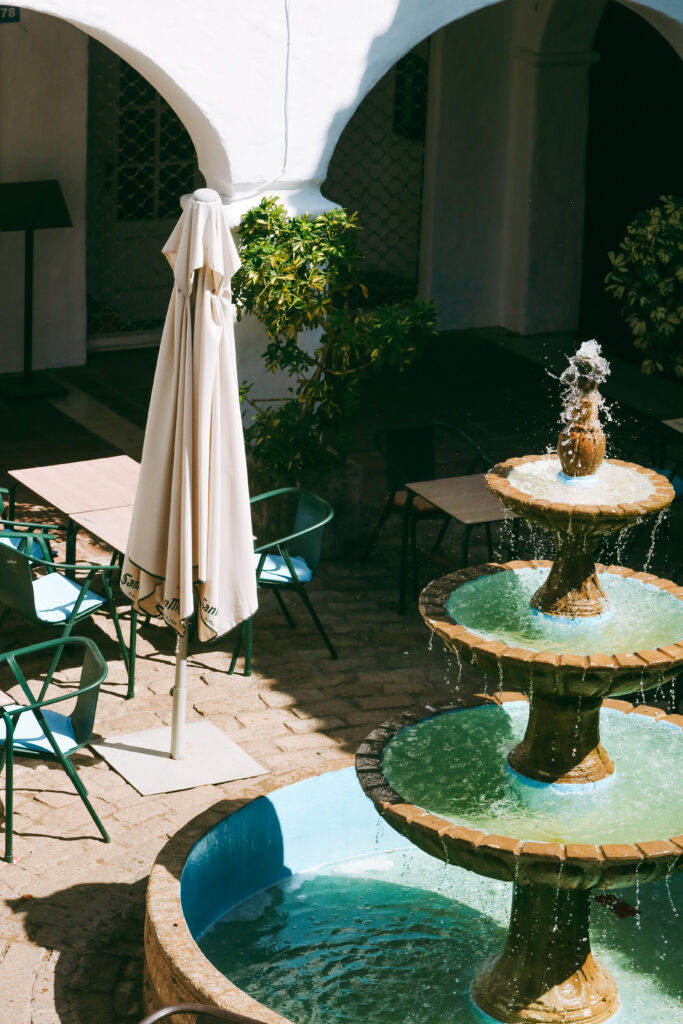
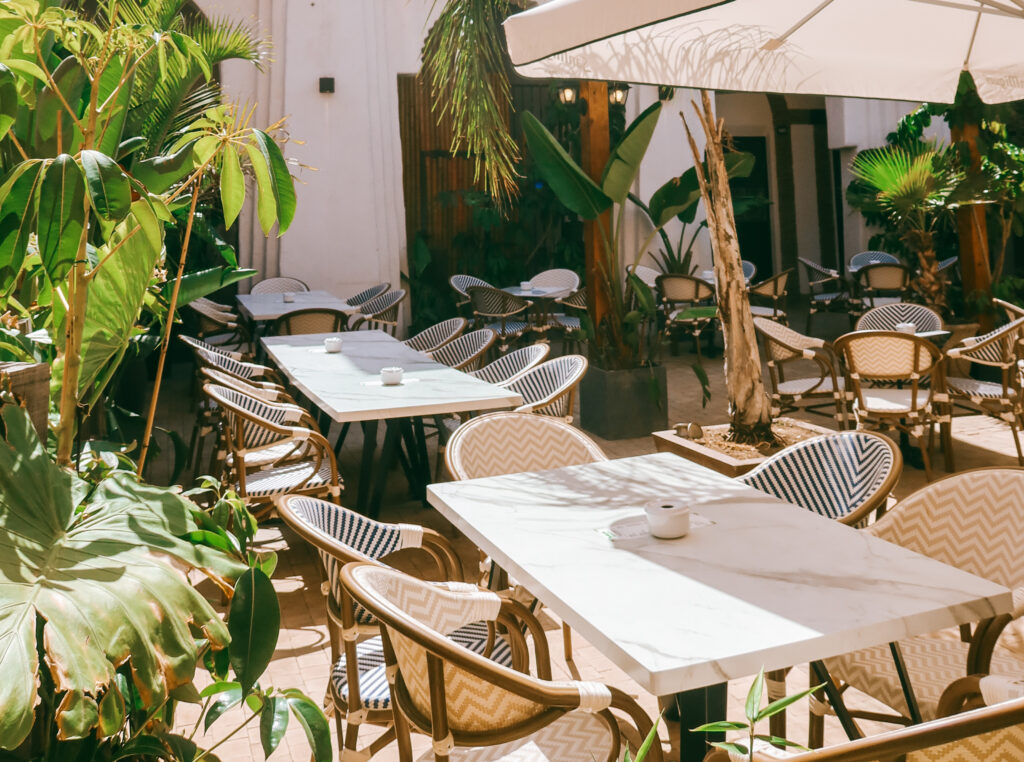
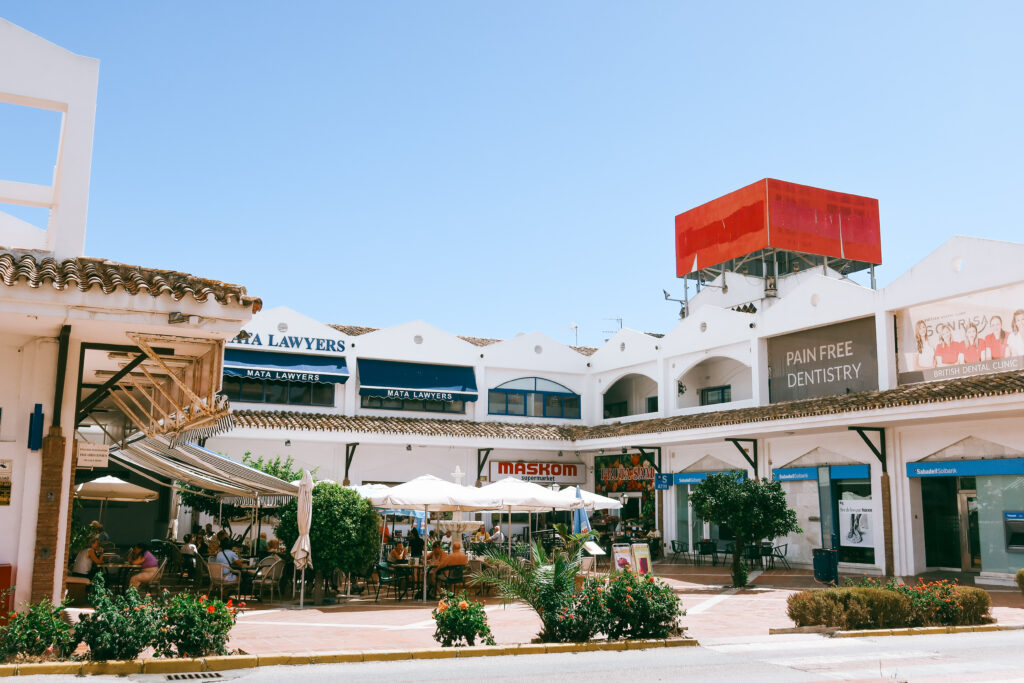
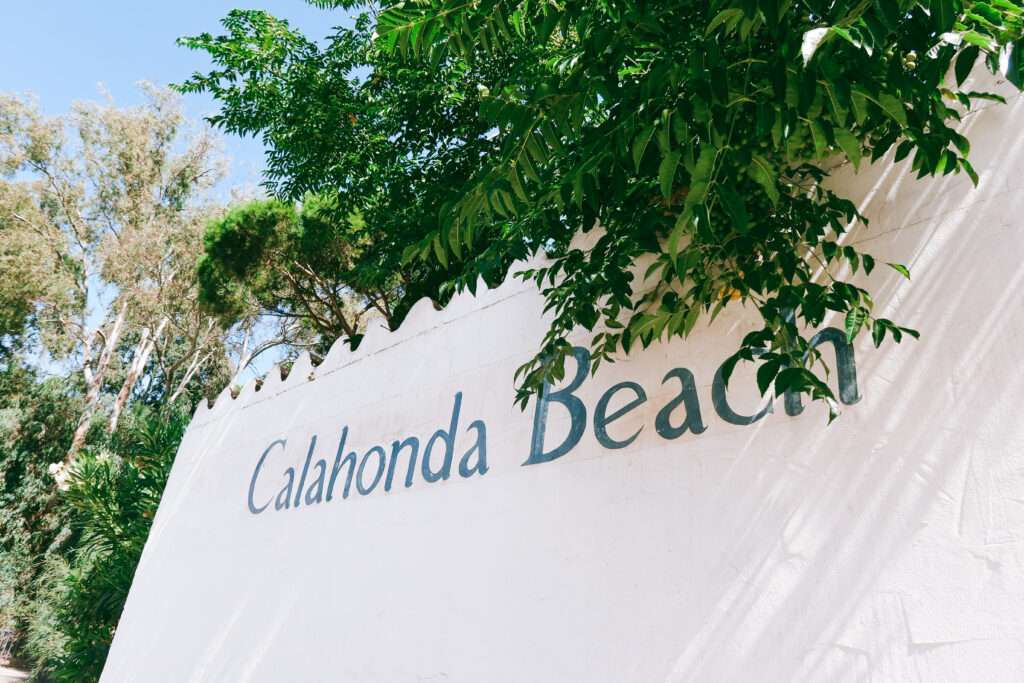
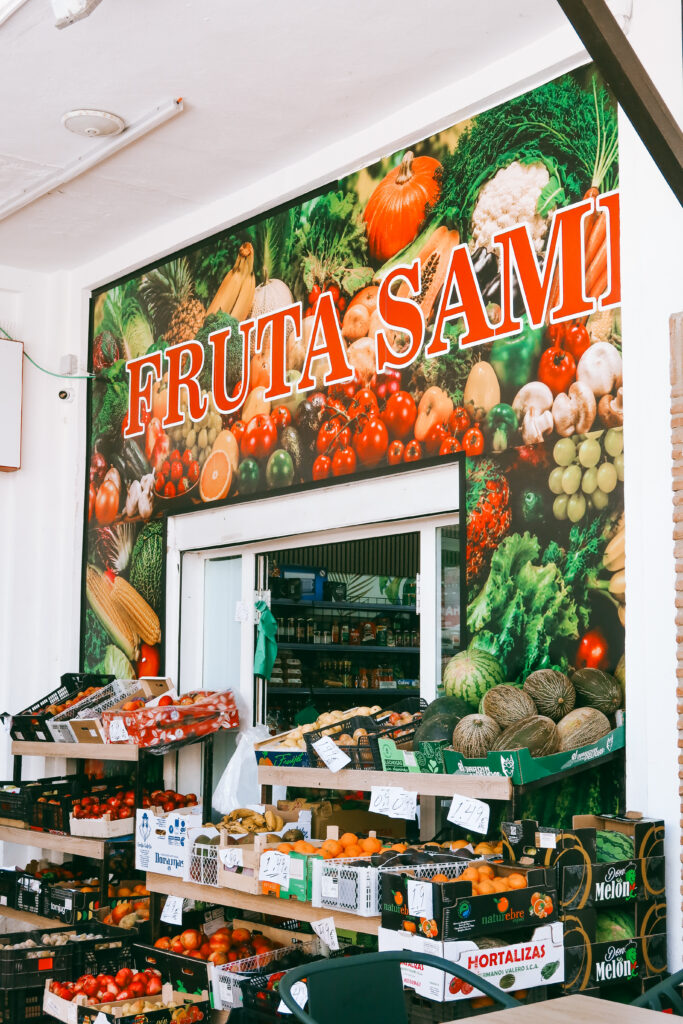
Daily life happens in the commercial centres, and there are a lot of them. El Zoco is the best known — a Moorish-styled warren of patios, small shops, a pharmacy, a vet, bars and restaurants, with a botanic garden in the middle and live music at the top end at night. It looks tired from the road and opens up completely once you walk in. Los Olivos, two minutes away, is the practical one: Carrefour, a Mas supermarket, plenty of parking. Campanario and Los Cipreses cover the lower half, with a fruit shop, a Sabadell branch and La Placita for coffee.
The beach is the other half of the story. Calahonda has around two kilometres of sand, two easy entrances with parking on both sides, and the Mijas stretch of the senda litoral — the coastal path — running its full length, flat and effectively step-free, walkable or cyclable for miles in either direction. Along it are the chiringuitos, of which Royal Beach is the long-standing local favourite, doing espetos off the boat grill. Worth noting for anyone who needs it: beach access here is unusually good for a wheelchair, which is rare on a coast where most of the seafront was built before anyone thought about it.
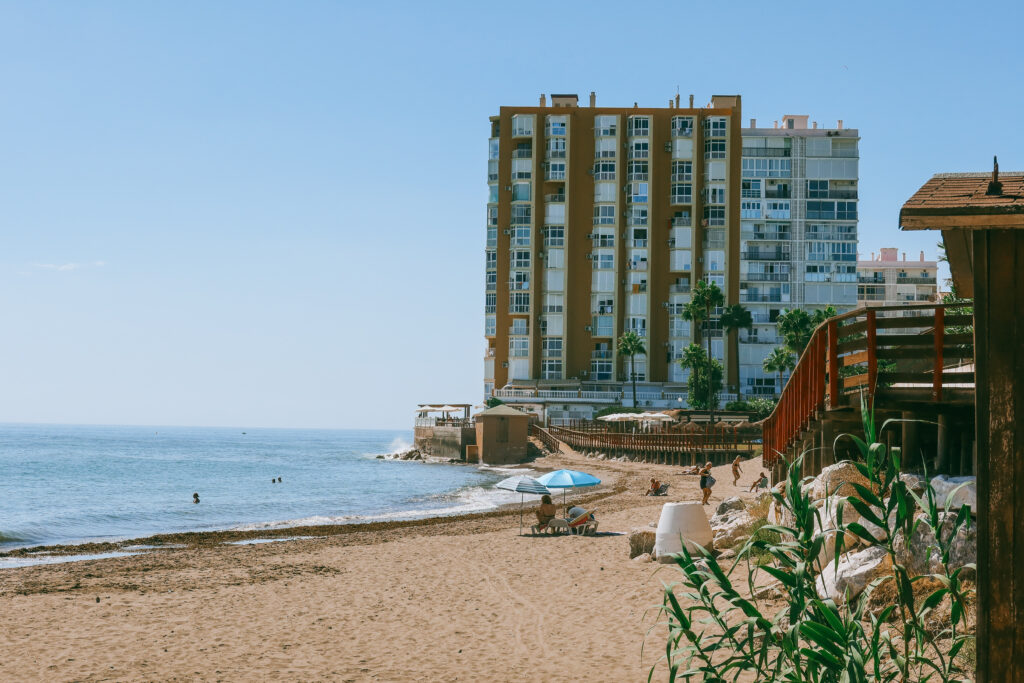
What property costs in Calahonda
Calahonda is where people move when Marbella East has priced them out but they are not prepared to go inland. The stock is genuinely varied, and the price you pay depends much more on where in the urbanisation you buy than on what you buy.
| Property type | Asking price | What you get |
|---|---|---|
| Semi-detached houses | Around €500,000 | Three and four bedrooms, typically mid-slope on streets like Calle Don José Orbaneja, walking distance to a commercial centre |
| Detached villas | Roughly €1.2m to €2m | Depending almost entirely on plot and build size. The wide cul-de-sacs near Oxygen sit at the upper end |
| Beachside apartments | Around €550,000 to €1.15m | The 1960s to 1980s urbanisations directly on the sand. Spanish-tiled, low-rise, character stock, and the cheapest way into a beachfront address on this part of the coast |
| Inland apartments and penthouses | Around €330,000 to €650,000; larger penthouses to about €1.15m | Two- to four-bedroom apartments and penthouses further up the urbanisation, with more space for the money than the beachside blocks |
Asking prices observed by Mitchell’s, September 2026. They are a guide to what is trading, not a market index. Apartment prices come from our current beachside and inland listings, November 2026.
To see what those bands look like on the ground, browse the Calahonda properties our team has selected. For apartments, see our beachside selection and our inland selection.
Two things about supply are worth knowing before you start looking. The best streets turn over very slowly — people who buy on a cul-de-sac like Van Dulken tend to stay, so you may wait for the right house rather than choose between three. And the beachfront stock is old, which cuts both ways: it is the value entry point on the coast, and it is also where renovation budgets get spent.
Sport, amenities and getting around
For an urbanisation of this size, the sports provision is the genuine outlier — better than most actual towns on the coast.
- Oxygen Sports & Wellness Club — the newest arrival and now the social centre of Calahonda. Indoor and rooftop gym, a HYROX area, classes, a restaurant, and five padel courts including one on the roof
- Club del Sol — established, tucked away four minutes up from Avenida España, and much bigger than it looks: 12 tennis courts (10 clay, 2 hard), four padel courts and four squash courts across a 29,000 m² site
- Finca Naundrup — a sports resort at the end of a cul-de-sac with a floodlit seven-a-side football pitch and new padel courts. Small bar, plastic chairs, foosball table; the least polished and the most fun
- Club de Golf La Siesta — nine holes designed by Enrique Canales, sitting in the middle of the residential area on Calle José Orbaneja
- Everyday services — four commercial centres, roughly 150 shop units, pharmacies, banks, vets and three churches inside the urbanisation
Getting out is easier here than almost anywhere else on the coast, because Calahonda has its own junction on the AP-7 toll road as well as the A-7 coast road. That matters more than it sounds: when the coast road jams — and it does — you have a second route rather than sitting in it. Málaga airport is about 30 minutes, Marbella around 15, Fuengirola under 10.
Schools are the one thing Calahonda does not have inside its own boundary. The British schools serving the area — St Anthony’s College in Mijas Costa among them — are a short drive away, and the school bus routes along this corridor all stop in Calahonda.
Who Calahonda suits — and who it doesn’t
It suits people who want to live here rather than visit. The value is real: for the price of a two-bedroom apartment in central Marbella you get a house with a garden, and you are five minutes from a beach, a golf course and three padel clubs. The community is long-established and mixed — Spanish, British, Scandinavian, Dutch — and, crucially, most of it is occupied year-round rather than shuttered from October.
It will not suit anyone shopping for prestige. Calahonda has no old town and no marina of its own — it is, as Chris puts it at the end of the tour, not the wealthiest town on the coast, but established and lived in. Nor will it suit anyone who wants everything new: a large share of the stock is forty to sixty years old. And if you are buying on the beachfront, walk the coastal path past the property before you offer — it runs along the back of several of the older urbanisations, and what you gain in access you can lose in privacy.
One cost that catches buyers out: as a private urbanisation, Calahonda is maintained by its own Entidad Urbanística de Conservación (EUC), a body with statutes approved by Mijas town hall that looks after the 30 km of roads and pavements, the street lighting, the green areas and refuse. Owners are its members and contribute to it. That is why the urbanisation is as well kept as it is — but it is a charge on top of your community fees and IBI, and it is worth asking what the current quota is on any property you are considering.
How Calahonda compares with its neighbours
| Area | Where, from Calahonda | How it compares with Calahonda |
|---|---|---|
| Cabopino | Marbella, west | A marina, protected dunes and a much smaller footprint. Prettier and pricier; far less to do day to day |
| Riviera del Sol | Mijas, east | The same idea as Calahonda and a similar price point, but with Miraflores golf and less green space per home |
| La Cala de Mijas | Mijas, east | An actual town with a real centre and a proper beachfront promenade. More atmosphere, less space for the money |
| Elviria | Marbella, west | The closest comparison for amenities, with three commercial centres and two golf courses, but inside Marbella and priced accordingly. Read our Elviria area guide |
| El Rosario | Marbella, west | Older, quieter and almost entirely villas, with a small commercial centre of its own. See the El Rosario area guide |
Calahonda: frequently asked questions
Is Calahonda in Marbella or Mijas?
Mijas. Calahonda sits in the municipality of Mijas, in the Mijas Costa stretch, and the boundary with Marbella runs just west of it near Cabopino. In practice most residents treat it as its own place rather than as part of either town, and estate agents list it under both Mijas Costa and Marbella East — worth knowing when you are searching portals.
What is the EUC, and why does Calahonda have one?
The Entidad Urbanística de Conservación is the body responsible for maintaining the urbanisation — roads, pavements, street lighting, green areas, refuse and the communal facilities. It exists because Calahonda was built as a private development from 1963 rather than as part of an existing town, so its infrastructure is conserved by its property owners under statutes approved by Mijas town hall, rather than by the ayuntamiento alone.
Is Calahonda good value compared with Marbella?
Yes, and that is its main argument. Detached villas here run roughly €1.2m to €2m and semi-detached houses from about €500,000 — figures that buy an apartment in much of Marbella East. You are paying less for the postcode and roughly the same for the build, which is the trade most people making the move are happy to take.
Can you live in Calahonda without a car?
Within your own pocket of it, largely yes — there are four commercial centres and most homes are within a few minutes’ walk of shops, a pharmacy and a bar. Beyond that, no. Calahonda is 300 hectares on a slope, the bus service is the coast route rather than an internal one, and anything in Marbella, Fuengirola or at the airport needs a car.
What is there actually to do in Calahonda?
Sport, mostly, and it is unusually well served: Oxygen for gym and padel, Club del Sol for tennis, padel and squash, Finca Naundrup for football and padel, and La Siesta for nine holes of golf. Add two kilometres of beach, the coastal path in both directions, the chiringuitos, and El Zoco in the evening for bars and live music.
How far is Calahonda from Málaga airport and Marbella?
About 30 minutes to Málaga airport and around 15 to Marbella, with Fuengirola under 10. Calahonda has its own exits on both the A-7 coast road and the AP-7 toll road, which is why journey times here hold up better than they do further west.
Is Calahonda busy in winter?
Less seasonal than most of the coast. A large share of the 6,155 homes are lived in year-round rather than let to holidaymakers, so the supermarkets, the sports clubs and a good number of the restaurants stay open through the winter. The Strip is the exception — it is a summer-evening economy.
What should I check before buying a beachfront apartment here?
Three things. The age and the state of the building — much of the beachfront stock dates from the 1960s to the 1980s. Whether the coastal path runs behind the property, and what that does to privacy on the ground floor. And the community’s reserve fund and any planned derrama, because older blocks on the seafront face renovation costs sooner than inland ones.
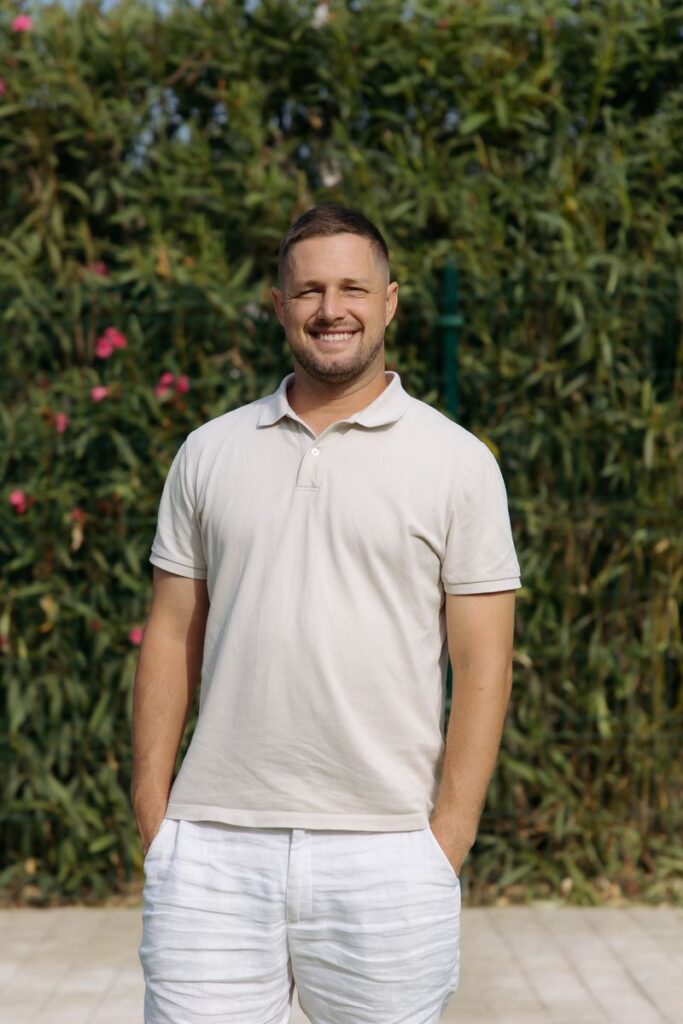
Born in Sweden and raised on the Costa del Sol, Chris has called the Marbella area home for more than twenty years. He came to property after a career in high-end hospitality with Ocean Club and Nikki Beach, and works with clients in English, Spanish and Swedish.
Looking in Calahonda?
We sell across Mijas Costa and Marbella East, and Tim lives in Calahonda — so if you want an honest view of a specific street or urbanisation before you travel, ask. See what we currently have for sale on the Costa del Sol, or tell us the budget and the brief and we will send the Calahonda list. In the meantime, browse the Calahonda selection.
Sources for the figures in this guide: the Sitio de Calahonda EUC’s own published statistics for the urbanisation’s size, housing and infrastructure; Mijas town hall tourism for Club de Golf La Siesta; and asking prices observed by Mitchell’s in September 2026.